Horses Parading Around ~ Including American Pharoah  

Horses and parades go together like peanut butter and jelly! This partnership began millennia ago when horses were paraded around to celebrate battle victories. More recently, the Horse Guard Parade, those beautiful black horses of the British monarchy stabled at the Royal Mews in London, codified the daily practice of ceremonial parades in 1745. There is even a type of horse in America called the Parade Horse. This breed is used in a sport the celebrates the Southwestern tradition where stylishly dressed ranch owners would ride into town on their high-stepping horses in saddles dripping with silver.

Today, I rode in my first parade, a mounted costume parade through the streets of downtown Danbury. Hosted by Happy Trails Farm, nearly 20 horses — and one donkey — ridden by a costumed clown, giraffe, queen of hearts, cowboy, ghost, Game of Throne’s winter, and even a pair of horseflies, paid homage to Halloween and horses. Dressed as Downtown Abbey’s Lady Mary out for a hunt my trusty steed Oz and I proudly marched across busy city intersections and bustling suburban woodlands with ease. He was such a good boy! And it was his first parade too.

Oz waits to head off on his first parade!

Oz waits to head off on his first parade!

But, the best part of the day was watching the spectators stare in awe at the horses. People came out of their apartments to wave. Others stopped their SUVs to watch the horses stroll down the cityscape. Dogs hung their heads out of car windows to get a glimpse, or bark a greeting. Many residents came to the curb to take photos of horses in their ‘hood. One man shouted, “You made my day!”

American Pharoah’s Post Parade

His remark reminded me how rare it is today to see a horse on any given day. On Halloween this year most people who saw horses, saw them in a different kind of parade, the iconic ‘post parade’ of Thoroughbred racing.The ‘post’ is the starting point of the race. It’s name comes from the early days of racing when only a post at the rail marked the beginning of the race. It’s why today, horses have ‘post’ positions, not starting gate positions. Before each race, the horses are called to the ‘post’ by a bugler playing some form of First Call. Once played, jockeys mount up, leave the paddock area and ‘parade to the post’ in front of the grandstand. It’s this pre-race parading that gives fans and bettors a good look at their favorite horses.

American Pharoah in the Post Parade at Saratoga Race Course

American Pharoah in the Post Parade at Saratoga Race Course

After his post parade, millions of TV viewers watched Triple Crown Champion American Pharaoh make history with his Breeder’s Cup Classic win at Keenland Race Course in Kentucky. A new achievement in America’s oldest sport was born, the racing grand slam — winning the Kentucky Derby, the Preakness, the Belmont Stakes, and the Classic. As a huge AP fan, I cheered him on as he pulled away at 6 and half lengths. Announcer Larry Collum screamed,  “He’s a horse of a lifetime!” as he crossed the finish line in a track record of two minutes. Jockey Victor Espinoza turned and smiled for the finish line camera to mark the end of AP’s triumphant racing career.

For most viewers of this historic achievement, sadly, television or social media will be as close as they ever get to see, not only a horse of a lifetime, but a horse in their lifetime. American Pharoah reignited the sport of horse racing and I’m hoping that with it the preservation of the horse, all horses, has truly begun. No longer are horses the mainstay of transportation. No longer do they pull plows for farmers to create food. No longer do small stables offering riding lessons or backyard barns to keep a pony for the children dot the landscape. There just aren’t as many opportunities for people and horses to cross paths and connect in the modern world. In cities we may occasionally see carriage horses, mounted police officers, or those in parades! In the suburbs, apart from secluded private farms, horses are even harder to spot in daily life.

I don’t want the horse to disappear from the landscape. We need horses in our lives. If you have never been in the company of a horse, go find one today, bring them a carrot, and say hello. They will change your life. They are magnificent animals with a deep, historic bond with humans. Oz and I may have done our post parade while following a black horse ridden by a bumble bee, but we were happy to share the beauty of horses with others. AP’s trainer Bob Baffert said it best about his charge — and all horses — when he called him, “a gift from God.” Let’s cherish them all.

A Carriage Ride Brings Back History

From city livery stables to carriage houses on large estates, my great-grandfather was known to drive a four-in-hand team with skill. A career coachman, he came upon his vocation at the turn of the 20th century, when carriage popularity was waning.

My great-grandfather Oscar Nelson drives a well-matched pair on Cortland Street, Sleepy Hollow, NY circa 1910

My great-grandfather Oscar Nelson drives a well-matched pair on Cortland Street, Sleepy Hollow, New York circa 1910

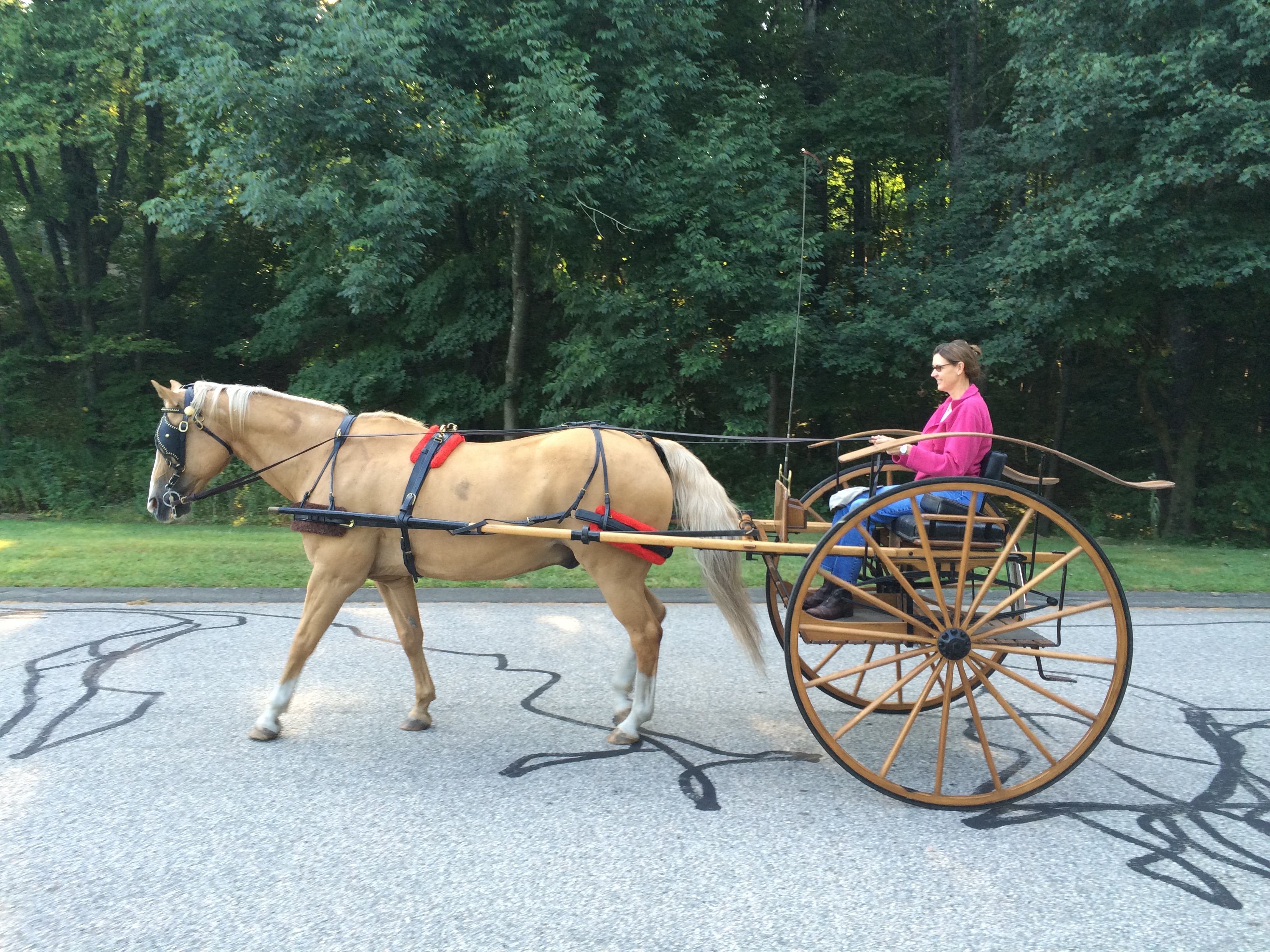
Last year, a carriage horse and driver took me on a wonderful tour of New York City’s Central Park, which ignited a desire to learn more. And while I may carry coachman’s DNA, I have never taken over the reins from a driver until last week when a friend offered to take me for a drive around my neighborhood with one of her horses pulling a light, two-wheeled ‘buggy.’

Tyler and his carriage at New York City's Central Park

Tyler and his carriage at New York City’s Central Park

Carriages by Brewster & Co. 

Carriage making was a major 19th century industry. The Brewster family had vast showrooms filled with Landaus, Broughams and Lady’s Phaetons, with factories in New York City and New Haven dating back to 1810. Brewster & Co. produced beautiful hand-built carriages, even earning a gold medal at the Paris Exposition in 1878. Business boomed for decades as they became known as the “Carriage Builder for the American Gentleman.” Among their customers were Rockefellers, Vanderbilts, Astors and J.P. Morgan, each with their own colored coaches, not to be owned by anyone else. But steam-powered train transportation exploded between the1830s and 1860s and signaled the beginning of the end for the horse-drawn carriages. The end came with a new invention called the “horseless carriage” during the Gilded Age.

Brewster Carriages, built in the 19th Century, were the finest in the world

Brewster Carriages, built in the 19th Century, were the finest in the world

By 1896, the first electric car was built by Brewster & Co, and by 1905 the company had ceased making horse-drawn carriages in favor of automobile bodies. But even then, the custom-made “coaches” couldn’t compete with mass-produced automobiles and in 1925 Brewster & Co. was sold to Rolls Royce of America.

William Brewster, Brewster & Co.s final president had a daughter named Barbara Brewster Taylor who lived in Southport, CT. Each year she would graciously open her estate – surrounded by natural jumping obstacles simulating a fox hunt – to host the Fairfield County Hounds annual hunter trials up until the late 1970s. I remember the gracious white-haired lady would come to watch occasionally. All I knew at the time as a teenager was that her father made “world-famous carriages and buggy whips.”

An 1887 Park Drag Brewster Carriage pulled by a team of fine bays

An 1887 Park Drag Brewster Carriage pulled by a team of fine carriage horses, possibly Cleveland Bays

Royal Coaches 

Despite progress, you can still find the world’s largest collection of working coaches and carriages at London’s Royal Mews at Buckingham Palace. Among them are the gilded, golden Coronation Carriage built for Catherine II and the sleek, black Glass Coach, my favorite when I visited the Mews, which carried Lady Diana Spencer to Westminster Abbey on her wedding day in 1981. Another popular open carriage, drawn by six of the Queen’s horses, is the 1902 State Landau which carried Kate and William, Duke and Duchess of Cambridge, back to Buckingham Palace after their wedding in 2011.

The Glass Coach returns from Opening of Parliament

The Glass Coach returns from Opening of Parliament

Driving Versus Riding Horses 

Sitting in the two-wheeled buggy I felt like royalty as we headed down the road. “Clip-clop, clip-clop, clip-clop,” sounded the hooves striking pavement. Feeling the motion of a small carriage is very different than horseback riding. A rhythmic bounce that can be softened by bracing your feet against the carriage floor and pushing your back into the seat. Before my friend turned over the reins, we had a safety lesson. “Always wear your seatbelt,” she told me. A little loop at the end of the reins placed over your pinkie finger. “The last thing you want to do is lose your reins while driving a carriage!” “Don’t stick your hands near the moving wheels or you will break your arm.” All valid points.

Walk on! My first drive!

Walk on! My first drive!

Carriage horses are trained by voice to “walk on,” “trot,” “walk,” “whoa,” “stand,” and my favorite, “come around.” This last maneuver moves a carriage on a turn, the horse executing a side-step, leg over leg turn on the haunches to turn a carriage left or right. Unlike riding where you have your seat and your legs, you only have a few aids left to control your horse: your hands, your voice and the fabled buggy whip.

Heading down the road

Heading down the road

Easily I got the hang of using my hands. The long reins held between the pointer and index fingers to drive a horse versus between the thumb and index finger while riding. The mechanics of steering, turning and stopping were executed with a stronger bit. And, just like riding, when you are on the road, and a big, loud, scary yellow school bus comes barreling down the road behind you, focusing your horse’s attention on anything but the school bus is paramount. You focus on the gait, “Walk on.” You point the horse’s head away from the impending confrontation. You hold your breath! And when the bus followed by eight cars passes, you tell the horse, “Good Boy!”

Good Boy Butter!

Good Boy Butter!

Despite the slow speed of a horse-drawn carriage compared to today’s cars, they can be dangerous places as horses can be unpredictable, and occasionally, will bolt despite being harnessed to a large wooden structure. “Always have an exit strategy,” was part of the safety lesson. If you don’t, you can get seriously injured, as evidenced by many carriage accidents with runaway horses recounted in The Bee’s ‘Way We Where’ from 100 years ago. This time, however, I got a delicious taste of a bygone era, when horses pulled carriages and people needed them to explore and discover their world, at a much slower pace. The sky, the fields, the trees, the flowers, the birds, all came into view on their own, just waiting for my discovery.

Heading back to the barn

Heading back to the barn

Riding London’s Rotten Row 

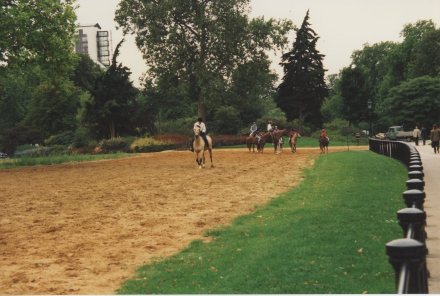
There’s nothing quite like urban horseback riding. Today equestrians can ride where kings once ruled and the city’s elite came out in livery carriages ‘to see and be seen’ along an historic path called Rotten Row in London’s Hyde Park. A plaque in the park tells us its story: Rotten Row The King’s Old Road Completed 1690 – This ride originally formed part of King William III’s carriage drive from Whitehall to Kensington Palace. It’s construction was supervised by the Surveyor of their majesties road, Captain Michael Studholme, and it was the first lamp-lit road in the kingdom. Designated as a public bridleway in the 1730’s, Rotten Row is one of the most famous urban riding grounds in the world.

Rotten Row Rituals

Hyde Park Stables, on a quaint side street called Bathhurst Mews her the park, offers horse rentals. During one trip to London I mounted up. As we exited the lane, the sound of iron horseshoes landing on ancient cobblestones gave rhythm to our walk towards the park. Our group of eight waited briefly beneath the Archery Tavern pub sign before crossing heavy traffic on Bayswater Road to enter the park beneath Victoria Gate.

Waiting by London's  Archery Tavern on our way to Hyde Park

Waiting by London’s Archery Tavern on our way to Hyde Park

Sitting tall in the saddle, feeling the horse’s stride lengthen, we both relaxed with each stride as we walked along the West Carriage Drive. As we crossed a bridge over The Serpentine, the park’s biggest lake, we gathered up behind the Albert Memorial. Surrounded by greenery, tall trees and bushes brilliant in their fall colors, we stepped upon the famed Rotten Row.

“We are all going to wait, until I tell you to go, and take a canter, one at a time,” our instructor said. POW! A small bay pony burst forth down Rotten Row with a little boy astride. He was kicking his little legs, that barely reached below the saddle, and flapping his little arms like a bird trying to take off. Elbows pointed skyward came slamming against his sides in unison with his legs hitting the pony’s barrel side.

“Stooooop Him!… Stop Him!…” came the call from our leader. Little boy must have been deaf as the more he was yelled after, the faster his fluttering legs and arms moved. Now, the leader took off after him, making a daring grab of the reins to pull the pony to a stop. Many in our group were having a good chuckle. Then once all back in formation, one at a time — pony and boy sent to the end of the line — we did our own impressions of fluttering legs and arms to get our bridle-path weary horses to canter down Rotten Row.

Leaving the group to canter down Rotten Row on Sedrick, a handsome buckskin from Hyde Park Stables

Leaving the group to canter down Rotten Row on Sedrick, a handsome buckskin from Hyde Park Stables

Most were obliging, others needed more coaxing. The mile long canter down a 75-foot wide path of fluffy tan footing made for a nice ride. Compared to the hard packed cinders on Central Park’s bridle path, it was like floating on a cloud. The challenges in any park setting, waiting for something to dart out into your path that might spoke the old steed, were ever present. The scenarios were endless. Dogs, children, children chasing dogs, balls, children chasing balls, dogs chasing balls, children chasing dogs chasing balls, errant tourists, police on horseback in pursuit of suspects. You get the picture. After safely making it down Rotten Row to Queen Elizabeth’s Gate at Hyde Park Corner, we stopped to collect our breaths and release a sigh of relief. What a lovely calm ride.

‘Ware Traffic

Our group gathered near the Archilles Statue and made a left turn to head down Dorchester Ride, another fluffy lane to canter. Basically, we heading back home to the mews. One at a time, we were launched. Asking Sedrick for a canter this time was not even necessary. Like all good hack horses, he knew where to walk, trot, and canter. And canter he did. Full out this big buckskin boy began, having the time of his life. Nothing I did slowed his canter home. Quickly I realized it was time to enjoy the ride and not be in control (those who know me can chuckle here) but not before I saw the bus.

Heading towards Queen Elizabeth's Gate at Hyde Park Corner

Heading towards Queen Elizabeth’s Gate at Hyde Park Corner

I looked to my right and there at eye level was a red double decker bus speeding down Park Lane, a busy highway parallel to the park. Sedrick was in a race with the bus. It seemed like the bus was heading towards us. We got so close, I could the terror in the tourists’ eyes as they looked at us, seeing the terror in my eyes. As Sedrick passed the Joy of Life Fountain, with the bus getting closer, I thought for a moment it might turn into my personal End of Life Fountain. But the trail then veered left away from Park Lane and the bus.  Now, I started to breath, but still cantering while taking in the sights and sounds of London around me.

As Speaker’s Corner appeared I could see the Marble Arch in the distance. I could hear pigeons flapping and police activity. I could smell the diesel fumes from the traffic that swirled around the park. And then, as if on cue, bomb-proof Sedrick slowed to a walk, blew out his nostrils, lowered his head and headed home on the North Ride with the rest of our herd. I wore a smile from ear to ear. Cost of horse rental £85 – Cantering next to a double decker bus taking tourists to Harrods in Knightsbridge – priceless.

Next time you’re in London – book a ride at www.HydeParkStables.com

Hollywood Pony Dreams ~ Admiral

Two blockbuster movies hit the silver screen in 1939, The Wizard of Oz and Gone with the Wind. We all remember Dorothy’s iconic little dog in “Oz” a Carin Terrier named Toto. In “Gone” there were more than 1,100 horses used that in that production. Animals always add humanity our storytelling. Their actions can change a plot or slow down the pace of a well told tale. What many don’t know, is that in addition to both movies sharing director Victory Fleming, they also shared an animal actor, a little black pony named Admiral.

In Oz, his appearance was a brief role in Munchkinland. He was one of two small black ponies pulling a carriage, that Dorothy stepped into with her ruby slippers, in celebration of killing the Wicked Witch of the East. As Admiral and his handsome mate pulled the carriage around the circular beginnings to the yellow brick road, Munchkins broke into song with “Ding Dong! The Witch Is Dead!”  So cute was Admiral with his gold-painted hooves and gleaming white harness,  an ostrich feather atop his headstall. He did a great job of sending Dorothy off on her journey to the Emerald city.

Admiral pulling a carriage in Munchkinland in The Wizard of Oz

Admiral pulling a carriage in Munchkinland in The Wizard of Oz

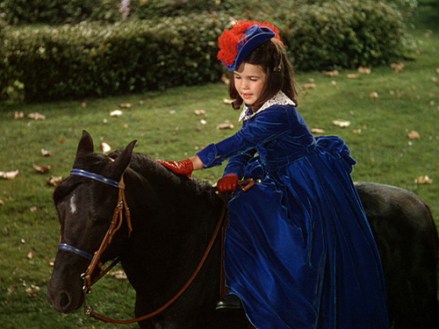
Later in 1939, Admiral made a larger supporting role in Gone with the Wind. He played a spirited pony, a gift from Rhett Butler to his young daughter Bonnie.  We see young Bonnie mounted on Admiral sporting a beautiful blue velvet riding habit, complete with red leather gloves to match the red ostrich feather atop her matching blue velvet hat. Which, by the way, matched Admiral’s noseband and browband on his tanned leather bridle.

Bonnie rides Admiral side saddle in Gone with the Wind

Bonnie Butler rides Admiral side saddle in Gone with the Wind 

Bonnie, as spirited as Admiral, was telling her parents that she was going to show them how she could jump, a bigger jump than before. Scarlett, alarmed, pleaded with Rhett to make her stop, not to jump.  He reminded Bonnie that she had just learned side saddle and perhaps wasn’t quite ready to attempt such a great feat. In defiance of her parents, off Bonnie canters fast towards the raised bar jump. And then we see Admiral’s crash, Bonnie’s fall and Scarlett’s scream.

Not a bad performance for a young Hollywood stunt pony. Admiral, who did his own stunts, was owned by Hollywood stunt man and animal trainer Dick Ryan. In a single year, his brief appearances in two of the most beloved movies of all time cemented his celebrity. And as has happened with other famous equines before and after him, his retirement years were bound to be filled with public appearances to his devoted fans.

Admiral Admiration 

It was a sunny California morning as my Mom and I went shopping at the Del Monte Shopping Center in Monterey. We were there to visit my grandparents. My grandfather, editor of the Monterey Peninsula Herald newspaper, had arranged a trail ride for us at the famed Pebble Beach Golf Club. Back in the early 1970s, they had horses on the property and you could take them along the trails that meandered between the links and the Pacific Ocean. After that ride I was high on all things horsey, and a few days later we found ourselves in the Del Monte Center parking lot.

I spotted a little white horse trailer and dragged my Mom over to see what was in it. A tall man wearing a cowboy hat was backing a little black pony out of the trailer. I watched as the pony turned around and walked very gingerly on what seemed to me to be very long hooves. Almost with pointy toes, like Munchkin shoes.

“Why does he walk like that?” this inquiring pony crazy girl wanted to know.

“Founder,” cowboy hat man said.

“This is a very famous pony. He was in The Wizard of Oz and Gone with The Wind,” cowboy hat man beamed. “Would you like to pet him?”

As I walked toward equine Hollywood royalty, wide-eyed, arm outstretched, my palm landing on his soft neck. As I stroked him I asked cowboy hat man how old he was. “He’s 52!” Did I hear that right? I knew ponies could live long, but wow! He did look very old, especially the way he walked, but still. We stayed for a while, Mom grabbed my hand and we were off.

Paul rides Admiral in a parking lot in the early 1970s

Paul Miles Schneider actually got to ride Admiral in a parking lot in the early 1970s – Dick Ryan walks beside him. 

Recently, I came across Paul Miles Schneider’s blog that aged Admiral at 6 months old in 1939. This made a bit more sense to me, sort of. That would have made him 32 years old that day I met him in a parking lot. He was the same age as my Mom that day – she was born in 1939. And my pony Gingersnap had also lived to be 32, so I guess 32 makes more sense than 52. Funny, how we have childhood memories that really stick into our minds. But, I find it hard to believe that a 6-month-old pony could be trained to jump, crash into jumps, canter, be side-saddle broken, and trained to drive a carriage at such a young age. Sounds more like what a seasoned stunt pony of say maybe 20 years old might be capable of. Only Admiral knows for sure. But I tend to believe the cowboy hat man, Dick Ryan, the pony’s long time owner.

Summer Camp ~ Pleasure Pony Dreams

My chestnut pony Gingersnap first made the long journey with me to summer camp in New York’s Adirondack Mountains when she’d been in our family for just over a year. She was barely 4-years-old. I was 12. Loaded into an open-sided flatbed truck for the trip North, I met her a few days later at Camp MacCready. This sister camp to Camp Pok-O-Moonshine, a converted military boys camp, also clung to rituals like morning inspections, Sunday vespers and eating en masse in a mess hall. Fortunately, the girls camp had a horse program with its own rituals where I learned to ride just two seasons earlier.
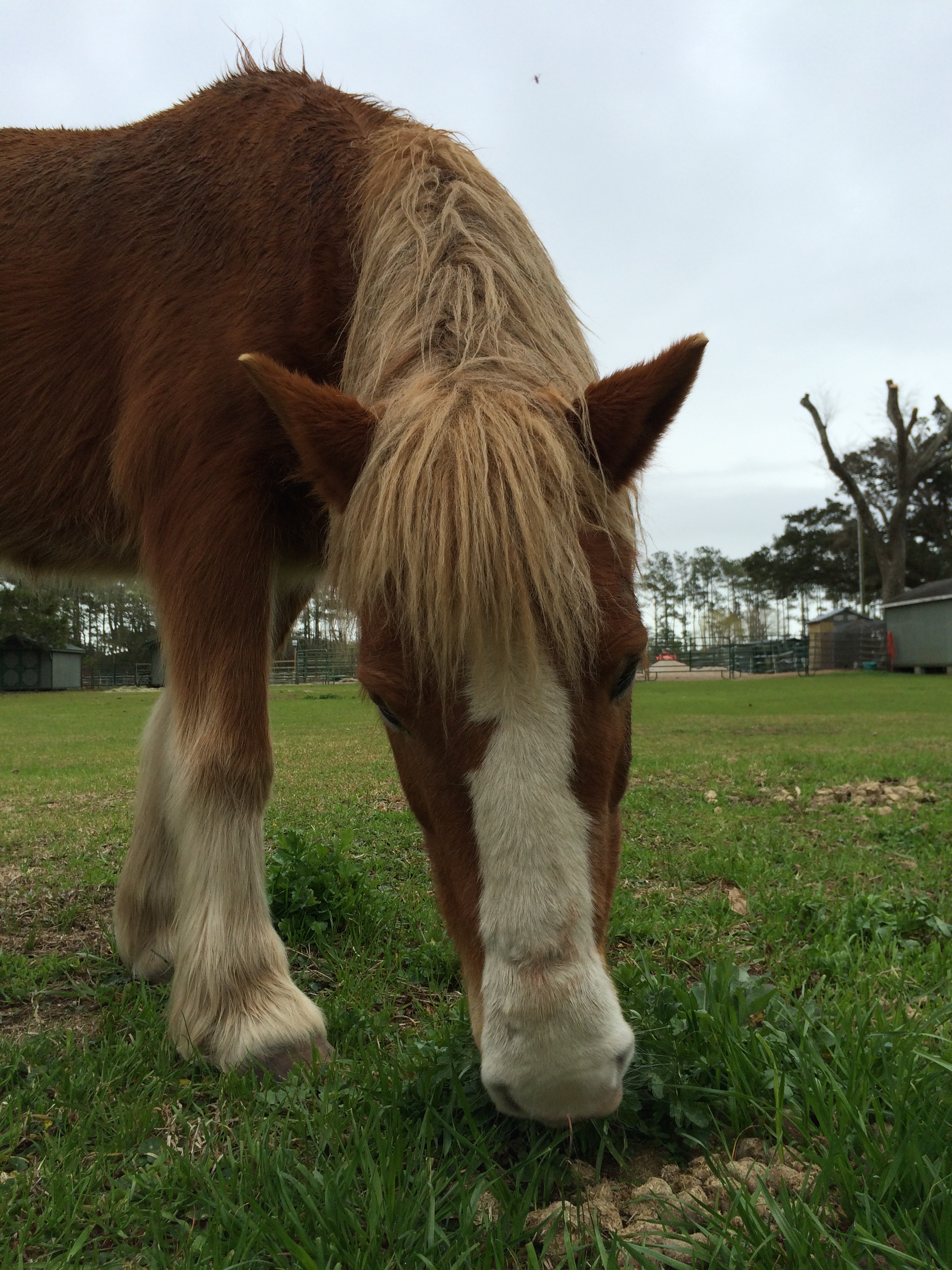
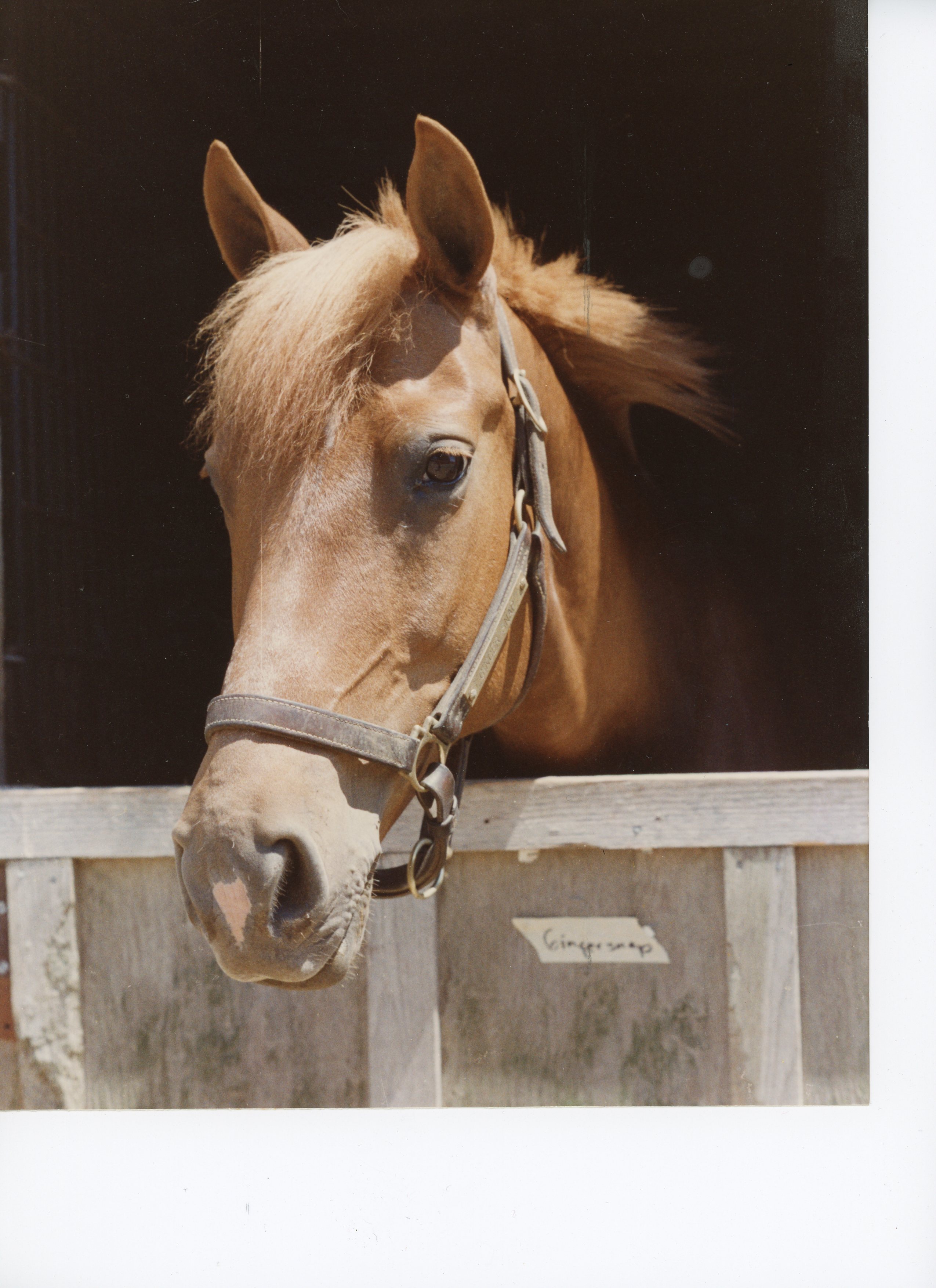
My chestnut pony Gingersnap

My chestnut pony Gingersnap

I’ve never been a morning person. Not even the lure of getting up early for a horse show works. So as a tween at camp, rolling out of my top bunk to join the other ‘horse masters’ to feed our hungry charges and muck manure-laden stalls, all before breakfast served precisely at 8 a.m., was a daunting task. Most mornings the head riding counselor would come get me out of bed, since all the horses had to be fed at the same time for fear of a barn riot. Eventually, my morning routine was established and my horsemanship skills, including pitchfork handling, wheelbarrow driving and manure pile management, improved.

As a barely saddle-broke pony, Ginger regularly bucked me off during our first year. Ring dirt and I were well acquainted. My parents had a teenager train her while I polished my stay-on skills on school horses. She had been sent to camp where counselors took over schooling her. So when we arrived, Ginger wasn’t my regular ride. By the end of summer, she was.

Ginger Strikes a Pose with Lisa at Camp

Ginger Strikes a Pose with Lisa at Camp

Pleasure Pony Dreams

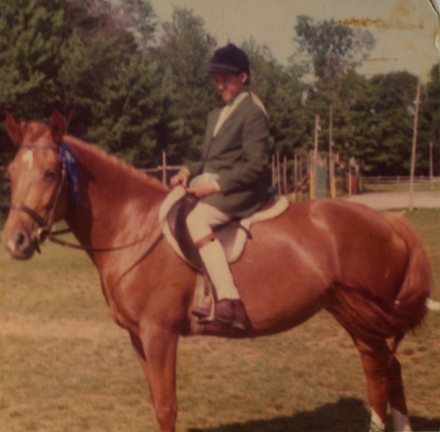
As camp came to a close, we readied for the annual camp horse show. I was told I could ride Ginger in one flat class. My riding counselor entered us in the pleasure horse/pony class. “What? Pleasure? She’s the farthest thing from a pleasure pony,” was my young equestrian assessment. Despite protests, I laid out my show clothes and polished by brown paddock boots the night before. Meanwhile, a counselor tamed her long chestnut mane into tidy little braids held by brown yarn. I dreamed of a blue ribbon for my ‘pleasure’ pony.

Lisa and Ginger Share a Moment at Camp

Lisa and Ginger Share a Moment at Summer Camp 

The next morning I bolted out of bed. By midday, our class was called and atop Ginger we boldly walked into the makeshift ring. Its outline marked by a fence of burnt orange wooden slats held together with wire, more suited for keeping back blowing snow than encircling show horses. We went though our paces to the left – walk, trot, canter  – then reversed and executed the walk and trot to the right. On the far side of the ring the senior camper tents – worn green canvas perched on wooden platforms, most likely surplus from one of the world wars, I’m going to guess the first one – were softly flapping in the late summer breeze.

“All canter, please. All canter,” the ringmaster commanded. Once around the ring, pleasurably, we went. As Ginger rounded the far side of the ring, she decided flapping tents were scary. Bolt, buck, bounce, buck, and upon landing I heard the ringmaster, “All walk, please. All walk.” With a mighty upward pull of my right arm, left hand braced deep into those braids, I stopped her in mid third buck. Whew! What timing. I had her at the walk just at the right time. But I knew we’d blown our chance of being pinned a pleasure pony. “All line-up, numbers towards the judge please,” came the final instructions.

“In sixth place… fifth place…,”  came the results from the loud speaker. By the time second place was announced I was ready to walk out of the ring. “In first place, number 22, Gingersnap!”

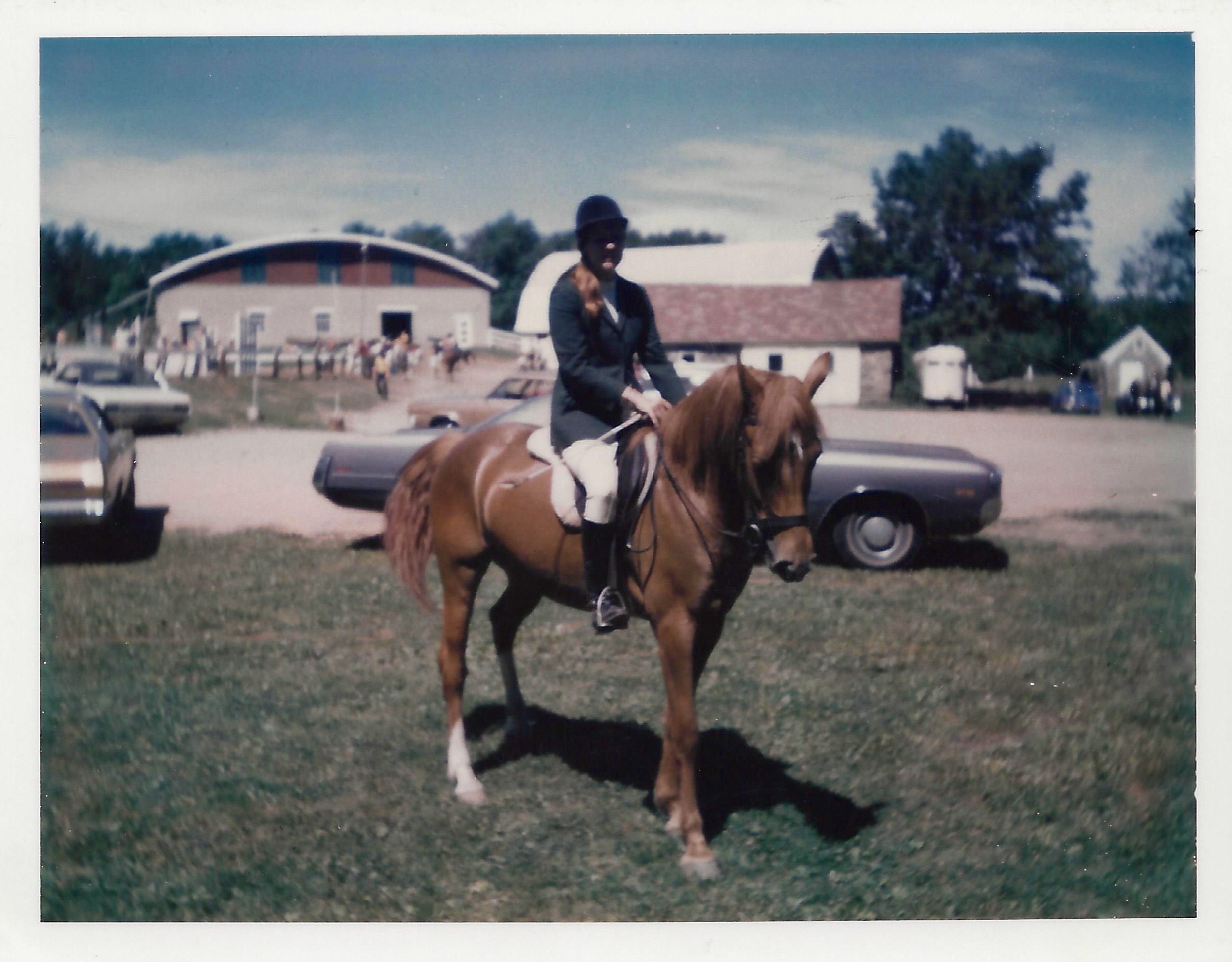
Blue Ribbon Pleasure Pony Gingersnap at Camp MacCready

Blue Ribbon Pleasure Pony Gingersnap at Camp MacCready

“What? Pleasure? She’s the farthest thing from a pleasure pony,” was my young equestrian assessment. I had a confused look on my face as I turned towards the ringmaster to get my blue ribbon. To this day, I don’t know how we won that class. My young equestrian assessment was that the judge was rewarding me for staying on. My adult hindsight says the judge didn’t see our acrobatics, since the pleasure class is judged on the horse’s performance not the talent of the rider. Who knows? However, the faded Polaroid of that moment, with a blue ribbon tucked in her bridle and a silver plate clutched in my hand, remains once of my favorite images in the scrapbook of my summer camp career.

Even Mom showed Ginger at Horse Shows at Sweetbriar Farm

Even Mom showed Ginger at Horse Shows at Sweetbriar Farm

Trail Riding During Mad Dash at Fairfield Hills

Last time I rode on the grounds of Fairfield Hills it was the late 1990s for the Second Company Governor’s Horse Guard Judged Pleasure Ride. This annual event has obstacles to tackle, things to pull, gates to open and executing some pretty scary stuff that you’ve probably never done on your horse before that day. Aside from the mylar balloons that thwarted our team’s chances at glory that year (we came in second) its challenges are nothing compared to what I encountered this past Saturday trail riding during the Mad Dash Adventure Race, but more about that later.

Oz and me head out on a trial ride from the Fairfield Hills Campus

Oz and me are ready  to head out on a trial ride from the Fairfield Hills Campus. Photo Credit: Ray Peterson 

A Sea of Timothy Grasses

This past month, I’ve been blessed to return to ride the hills. A benevolent friend takes her horses and me out to enjoy this hidden beauty nestled in the center of town. I don’t know who or what organization mows those lovely paths around the perimeter of the fields, but thanks! It creates long ribbons of green velvet that cushions unshod hooves at the canter while riders can focus on the majesty around them. The tall grasses, crying to be turned into succulent bales, surround us so we look like floating upper bodies in a sea of timothy.  Unlike higher elevations in town, the sky opens up at these hills with clouds dusting the treetops, when the wind is just right.

A red barn, a brown barn, a ghostly metal pavilion dot the landscape as we bob along. We land at crumbling roads, now more gravel than tarmac, fallen prey to rainwater, erosion and neglect. We dive into open vistas, birds dart from the grassy depths as we gallop by, the good horses taking them in stride, not spooking at nature’s presence. Riding up the hills are especially joyous, faster and bolder, easier for them, more fun for us!  Sweat builds on their shoulders and haunches, signs that the day is getting hotter, and trails traversed longer. Another field, now plowed dark, waiting for seeds, fills the air with earthen scents. As we trot along the far side, silent stream to our left, fallow fields to our right, we slowly come to a walk as we met the long black driveway taking us far from where the cavalry horses and military dogs live. Ahead lies one final burst of pleasure called Yahoo Hill.

But first, we must cross Wasserman Way with rattling trucks and speeding cars, save but one, who slowed to a stop for the safe passage of the horses into the woods. A left turn, exploding up the hill, muscles rippling, hooves reaching, hocks pushing against the soft soil, trampling tall grasses down to the earth, slapping reeds echo as if cut in harvest. Atop the hill, nostrils flaring and heavy breathing from horse and rider, wide smiles all around. A great way to start the day in Newtown, still morning, not yet feeling the heat and hectic-ness of the day. Horses bow heads in agreement.

Oz & Bea plot their ride

Oz & Bea plot their ride! Photo Credit: Ray Peterson 

From Woodlands Into A Mad Dash

On Saturday, our trail ride grew to three gallant steeds and towards the end took us on a magical woodland journey. Blazing through fragrant pricker bush roses and other sweet-smelling native shrubs, disrupting bumble bees and scattering small birds, we came upon Deep Brook. Descending a rocky bank, a pause for an equine drink, up the muddy slope into soft pine needles soaking up splash and muffling footfalls.  Among majestic pines we meander along the river, up a steep incline into the cool forest. We turned right, across the Housatonic Railroad line onto a hidden, ancient trail. We walked along a former railroad bed, still clutching its old steel rails and rotting wooden ties. We weaved between strong maples disrupting the order and symmetry of the forgotten spur.  We emerged from behind the old storehouse at Fairfield Hills.

Mad Dash Race

Getting ready to load onto the trailer after the trail ride. Photo Credit: Rhonda Cullens

We ended at the intersection of Wasserman’s Way and Traders Lane. Waiting for the traffic light to turn to green, the Mad Dash Adventure Race was in full swing. Who knew? As we worked our way back to our respective horse trailers, fire engines sprayed water, tents and flags fluttered, runners scurried through mud pits, over tall wooden walls, and across slippery grass. This got the horses’ attention! As we neared our trailer, a big wave of children came crashing down on us — part of the Mini Dash for kids — dozens of them came barreling at us full speed with glowing t-shirts of orange, lime green and pink. Just before impact, they thinned into single file, banking right and away from us. The horses, prick eared, looking, thinking, moving sideways, waiting, then exhaling, relaxing, and head lowering as we ambled back to the trailer. I remarked to my friend, “Talk about distractions! We should get extra credit on our next judged pleasure ride for this performance.” The horses were great! And so was our ride!

What Healthy Foods to Have on Hand for Pets

By Lisa Peterson

Many of us who have pets always seem to be opening the refrigerator or cupboard to share our food with them. Most of us do this to provide healthy choices for our dogs but some of us who keep horses on our property have handy hand-outs to promote health and well-being for horses too! An old friend from a writer’s group picked up on several of these equine and canine foods and featured them today on the FitBottomedGirls blog.

Beyond Hay for Horses 

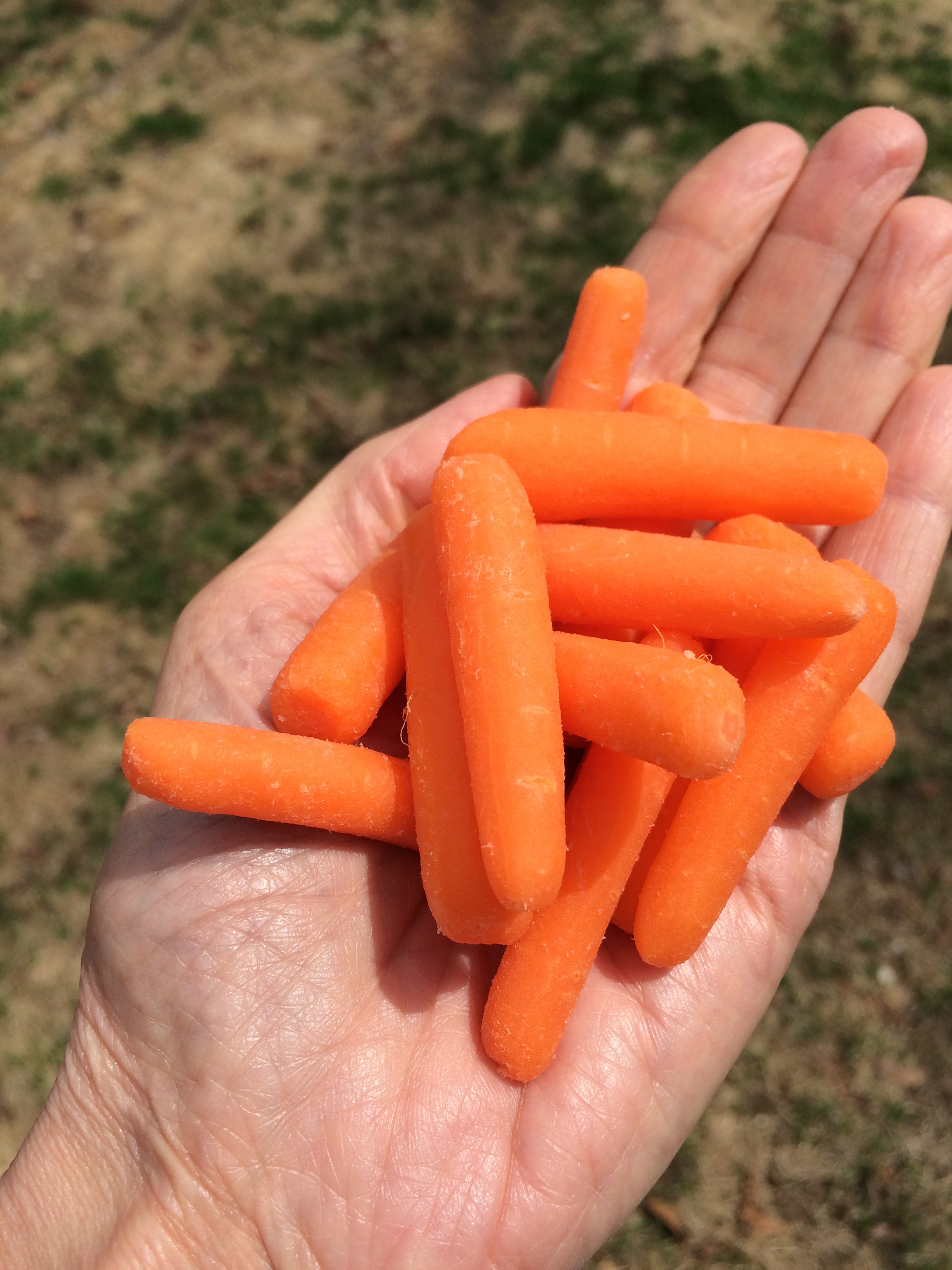
For horses there are severals things in the pantry that can be helpful. When selecting human food to feed your horse make sure it’s close to their natural diet as horses have a sensitive and complex digestive system. This means no chocolate breakfast bars or teriyaki chicken. The best choice, of course, is carrots! Carrots are loaded with beta-carotene and Vitamin A. They offer a nice treat to the horse for greetings and farewells. They are best served in long thin slices to safeguard from choking. Many prefer carrots picked fresh from the garden (or produce section) with their green tops intact for an added anti-oxidant boost.

Baby carrots are a great way to feed treats to your horse!

Baby carrots are a great way to feed treats to your horse!

One treat that is good only very occasionally are sugar cubes. Too much sugar is not good for any being, but once in a while a sweet little treat that usually hangs around the house for fancy parties in grandma’s silver sugar bowl is a horse’s delight. They can make great training treats for your horse as the ultimate reward.

Have a finicky drinker? Maybe you are worried your horse is getting dehydrated, especially in winter, when water can be ice cold and he’s not drinking it. Try adding a little warm apple juice to the water bucket. This sweet taste may entice your horse to slurp it down. Not drinking and getting dehydrated could put them at risk for colic, which could turn deadly.

And finally, an apple a day also keeps the horse doctor away! Sharing this crisp fruit with your equine friend will keep you apprised of how his teeth are doing. If your horse is looking a little thin, it may be because he is having trouble chewing. Feeding him apple slices are good nutritionally but will also show you whether food is falling out of his mouth, an indication of pain from long teeth or brought edges. Watching him eat apples or smaller pieces will give you a clue to his oral health and whether you need to call the horse dentist.

Daily Dose for Dogs

Many horse owners have dogs too!  And raw carrots are the cross-species training treat found in most pet owners homes. This low calorie, crunchy treat is great for dog’s needing reduced calories but still provides that crunch for oral health to reduce tartar accumulation on dog’s teeth. Baby carrots cut in quarters are the perfect size for treating.

Jinx trying to convince Ray that Nachos are good for dogs!

Jinx trying to convince Ray that Nachos are good for dogs!

Keeping your dog fit and healthy can also include some readily available people foods, surprisingly found in cans. Got a fat dog? Reducing fido’s waistline needs more than upping the daily walk. Here’s a trick to easily reduce calories without decreasing the volume of what’s in the bowl. If you feed your dog a cup of kibble per meal, try reducing the kibble by half a cup and replace the other half cup with canned string beans. This lower calorie alternative is tasty and will ease the transition of reducing the amount at meal time. Only feed the replacement beans for two weeks and then resume the regular ration of kibble. Still need to loose more weight? Feed regular rations for another two weeks and then replace rations with half green beans again.

Another super human food for dogs is canned pumpkin or pureed pumpkin. This high in fiber food that makes its annual appearance at Thanksgiving, can be used in a pinch if your dog needs a binding meal after bouts of diarrhea. Adding a few teaspoons to a few tablespoons depending on the size of the dog, can also help with canine constipation. Providing pumpkin keeps Rover regular.

String Cheese Please!

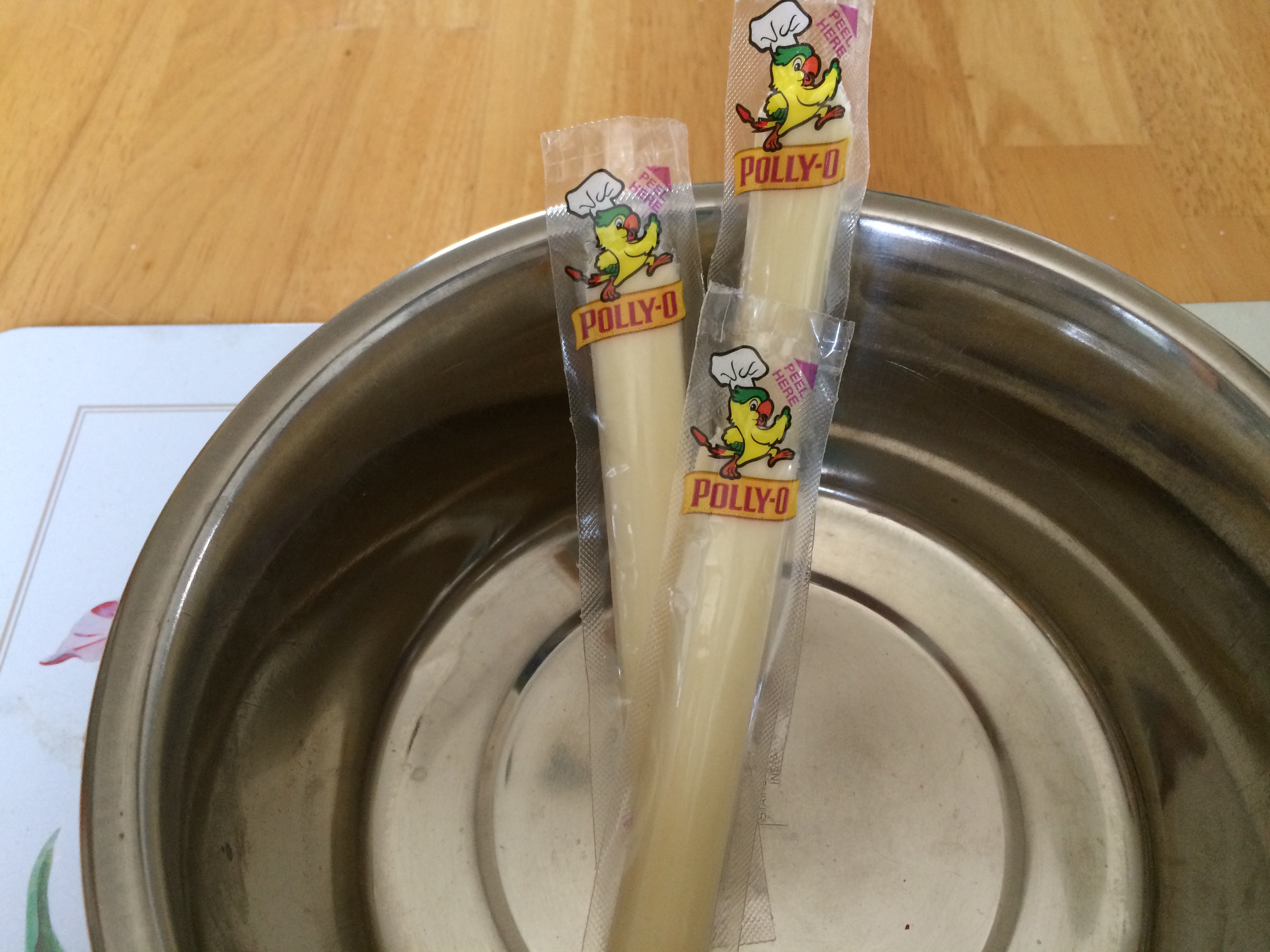
String Cheese Please!

A ubiquitous food in most refrigerator’s is mozzarella string cheese. The low fat version can be a much healthier alternative for training treats that anything you can buy at the pet superstore, many of which are loaded with calories, artificial preservatives and colors. Plus, this tasty treat can be placed in your mouth during training exercises which will draw your dog’s attention to your face, Once she is gazing into your eyes, she may actually listen to what you are asking her to do!

A General’s War Horse – Civil War Style

While today marks the 150th Anniversary of President Lincoln’s Assassination, it also reminds us of the Civil War’s other tragedies, including the loss of many lives, both human and animal. Unaware of the politics of war, a Union horse, born in Connecticut, was captured and became a Confederate General’s favorite mount. Unlike his General, Little Sorrel survived the war. Here is his story: 
One of the Civil War’s most colorful commanders was General Thomas “Stonewall” Jackson of the Confederate Army. During the war between the states, many generals had a string of horses, some with a favorite mount used for riding into battle.
Jackson’s most popular horse was foaled around 1850 on the Noah Collins Farm in Somers, Connecticut. According to Charles Worman’s book, Civil War Animal Heroes, Mascots, Pets and War Horses (http://www.civilwar-books.com), “Collins sold him to an Army buyer and he was one of number of mounts on a Union Supply train captured by Jackson’s force at Harper’s Ferry in 1861. Then-Colonel Jackson took several horses, one of which was originally intended as a gift for his wife and initially given the name of Fancy. But Jackson was so taken with Fancy’s easy gait and steady temperament that he retained the animal for his own use.”
Little Sorrel 
At some point Fancy’s name was changed to Little Sorrel, most likely to match his color.  Sorrel being a deep red coloring, sometimes with a flaxen mane and tail. According to connecticuthistory.org, Little Sorrel was a Morgan horse, descended from the original horse owned by Justin Morgan and whelped in Springfield, Massachusetts in 1789. This truly American breed was favored by Southern soldiers and Western cowboys alike for its calm temperament, small size and good health.
According to Major Henry Douglas, who rode with Stonewall, Little Sorrel was a “plebeian-looking little beast, not a chestnut; he was stocky and well-made, round barreled, close coupled, good shoulder, excellent legs and feet, not fourteen hands high, of boundless endurance, good appetite, good but heavy head and neck, a natural pacer with little action and no style.”
Little Sorrel After General Jackson's Death

Little Sorrel After General Jackson’s Death 

Several times Little Sorrel was accosted for trinkets from the famed general. A Union prisoner, being held close to the rump of the animal as they waited for the General to come out of his tent to determine his fate, started to pull hairs from his tail. Upon discovery, the General asked him “Why are you tearing the hair out of my horse’s tail?” to which the bemused prisoner replied, “Ah, General, each one of these hairs is worth a dollar in New York.” Apparently the general found this so amusing that the prisoner was not questioned further for Union secrets.
During the Battle of Chancellorsville Jackson was astride his favorite mount when the general was accidentally shot by friendly fire in 1863. In the confusing aftermath a terrified Little Sorrel became lost. A few days later Jackson died of his wounds and his favorite horse was not accounted for yet to join the general’s funeral procession. Eventually, he was found in Virginia and sent to the general’s widow in North Carolina by the Governor.
Post-war Celebrity 
In his post-war years, Little Sorrel went to live with the general’s father-in-law, a preacher who rode him to church for many years. In 1884, he even made an appearance — at age 33 — at the Hagerstown Agricultural Fair in Lexington, VA. Again, he was approached by many fairgoers, who plucked his mane and tail hairs, almost to extinction.  In the day hair, both human and animal, where used to make jewelry by braiding little bits of hair into rings, bracelets and necklaces.
Eventually, Little Sorrel was cared for by the Virginia Military Institute (VMI) for the reminder of his life. In the end he broke his back in an accident and died shortly after in 1886. His obituary in the local papers said he died at the Confederate Soldiers Home in Richmond aged 36 years. His body was sent to a taxidermist before returning to Richmond. Apparently the bones of the horse were sent to the taxidermist for payment, but eventually they found their way back to VMI in the 1940s.
Little Sorrel mounted after death at the Virginia Military Institute

Little Sorrel mounted after death at the Virginia Military Institute

In 1950, the life-sized stuffed war horse went back to VMI for display in their museum. In 1997, rather than let the bones remain in a museum storeroom, they were cremated and buried with full military honors at the base of a life-sized bronze statue of Jackson at VMI, where the general had once taught. Today, the taxidermy horse still stands at the VMI museum. Learn more here: http://www.vmi.edu/MuseumSystem/.
Little Sorrel Lane 
In 1991 the town of Somers decided it needed its own tribute to the great horse foaled on its lands. And so “Little Sorrel Lane” was dedicated with a ceremony by the Somers Historical Society, complete with rifle salute. This story reminds us of the important contribution that horses made during the civil war. In honor of their role, why not make a donation to the last remaining unit of the U.S. Cavalry, the Second Company Governor’s Horse Guard, located in Newtown, Connecticut. They desperately need our help as state budget cuts loom. Let’s keep their tradition alive to honor the war horses of our past.  Make a donation at the GoFundMe site: http://www.gofundme.com/pblvg4. I’d hate to see the last remaining vestige of the U.S. Cavalry be reduced to nothing more than a street named  “2GHG Lane” at Fairfield Hills.

Outer Banks Horses – More Than Just Misty

Marguerite Henry’s classic book Misty of Chincoteague certainly fueled my love of horses and countless other pony-crazed little girls for generations. The fictional tale written in the late 1940s features a herd of small wild horses on Assateague, a barrier island off the coast of Maryland and Virginia. While Misty and her adventures made wild ponies famous, there are several other herds of wild horses scattered among the Outer Banks off North Carolina. How these “banker ponies” got there is a mystery. They have been there for centuries. Legend has it they swam ashore to the barrier islands from shipwrecks of early Spanish and English explorers.

Shackleford Horse

Shackleford Horse

Shackleford Banks Herd

Shackleford Banks, situated off the coast of North Carolina, is the southern-most barrier island of Cape Lookout National Seashore. The land is owned by the federal government and managed by the National Parks Service (NPS). Living on the 9-mile long island, filled with nutrient-rich native grasses and sea oats, are the Shackleford Horses. This hardy herd fluctuating between 110 and 130 wild horses boasts an array of colors from bays and chestnuts to those with flaxen manes and tails. Proudly standing between 11 and 13 hands tall, they wear thick coats with coarse, long manes to protect them from hurricane force winds and damp sea fog. With keen instincts, stallions can quickly spot trouble on the horizon (or tourists!) to make that fight or flight decision to protect their ‘harems’ as well as mares protecting their newborn foals.

Today, the Shackleford horses are co-managed by the NPS, who owns the land, and the Foundation for Shackleford Horses, Inc. (FSH), a North Carolina non-profit corporation and an IRS 501(c)(3) charity founded nearly two decades ago and run completely by volunteers. The foundation’s mission is to “Protect and Preserve” the Shackleford herd. One of its first goals was to find a permanent way to do just that.

Awaiting a new home! Visit Schacklefordhorses.org

Awaiting a new home! Visit Schacklefordhorses.org

Federal Protection 

In gaining federal protection, scientists needed to establish a genetic link to their historic status as a native breed. Oral histories and quotes from generations of coastal North Carolinians are important, such as “They’ve always been there, they were here when our people came; they swam ashore off sinking ships.”  But having sound scientific research and evidence would be even better.

In 1997, researchers, after studying DNA blood samples, established a genetic link to the early Spanish horses. Most importantly, one very old genetic variant called, “Q-ac” surfaced. This marker was found in two other older equine populations, the Puerto Rican Paso Finos and the Pryor Mountain mustangs in Montana. Its appearance is significant as it can easily be lost through some called “genetic drift” which means it would have disappeared quickly if non-Spanish modern horses were introduced into the herd along the way. With scientific evidence in hand, the FSH was able to move forward with the “Shackleford Banks Wild Horses Protection Act” and a year later President Clinton signed the bill into law.  The FSH now manages the herd in partnership with the NPS by use of birth control darts, rescuing some that wouldn’t survive on their own and removing others off the island for adoption to control the herd size for optimal survival.

Scratch me here!

Scratch me here!

Last weekend, I had the pleasure of meeting Carolyn Mason, who helped start the foundation and keeps the adoptees and rescues on her farm on the mainland. Her family has been in the area for generations. Watching her commune with the ponies was like seeing an artist nurture her canvas. She knew all their moods, all their habits, all their lineage and history. She had been caring for them for decades not only against the ravages of hurricanes on the outer banks but in her backyard. She spoke of each horse on the island, not as the number they are assigned, but the names they had been given like Spirit and Merlin. At her farm, I met “Aftermath” born during Hurricane Irene. Her knowledge includes knowing matriarchal breeding lines, knowing how many foals a mare had and to which stallion. Listening to her was like watching an episode of National Geographic. Mason watches this wild herd from a far, yet intimately stewarding them, like the gentle stroke of an artist’s hand, wanting to capture the beauty of nature on the canvas but not disturbing the natural setting.

Schackleford Horse Diego

Schackleford Horse Diego

With the help of dedicated foundation volunteers like Mason the FSH continues their historic, genetic, health and cultural research. Herd numbers are still over 100 horses with room for sustainable growth and genetic diversity. This stewardship of a centuries-old herd is the kind of story that hopefully future generations of children will discover just as I discovered Misty over a half century ago.

Some great resources on the Shackleford Horses:

Horses Have Birthdays Too!

Last week we learned husbands have birthdays and hounds have human age equivalents. But what about horses? Unlike purebred dogs, most horses don’t come with registration papers with their birthday proudly displayed, so it’s a guessing game. Even Thoroughbreds registered with The Jockey Club lose their actual birthdays to the convenient New Year’s Day in order to have a consistent racing year.

Before you can calculate a horse’s human age equivalents, you have to determine the horse’s age in actual years. For centuries horse traders have peered into the equine mouth to look for clues. Horses, like dogs and humans, have two sets of teeth, their baby or ‘milk teeth’ and their permanent teeth. Most horses have all their permanent teeth by age 5 and are considered to have a ‘full mouth.’

It’s easy to look at a very young horse’s mouth and see which milk teeth have appeared or been replaced by permanent teeth in determining his age. Once a horse is considered ‘aged’ (9-years-old and beyond) there are other more subtle signs to look for. Unlike dogs and humans, horse’s permanent teeth continue to grow throughout their life. This phenomena ensure a lifetime of grass grazing and grain grinding. As they age, horse teeth also change shape and develop markings.

As a Thoroughbred registered with The Jockey Club, Mikey's birthday is always January 1st.

As a Thoroughbred registered with The Jockey Club, Mikey’s birthday is always January 1st.

Cups, Stars, Grooves, and Hooks

Cups: The shape of the tooth changes from rectangular to triangular as the horse ages. When you open the mouth of a young horse and view the bottom front teeth (center and corner incisors) on the grinding surface from above, you will see dark rectangular centers called ‘cups.’ These cups are visible on all incisors by age 5, but slowly disappear from the teeth progressively. They fade first on the bottom from the center teeth out to the corners and then on the top from the center out to the corners, so by age 11 all the cups should be gone.

Stars: As the cups begin to disappear, a ‘dental star’ appears on the grinding surface towards the front of the tooth. This yellow-colored spot starts out rectangular and becomes rounded with age and will eventually replace the cup on each incisor. The stars begin to show up around age 8 on the center teeth and appear on the corners by age 11.

Galvayne’s Groove: This dark-colored groove is located on the incisors at the upper corner of the mouth, just before the canine teeth. This groove won’t appear until the horse is around 10 years old. It appears first at the top of the tooth and works it way down the front of the tooth. It reaches the middle of the tooth by age 15. Then it continues down to the bottom of the tooth by age 20. Then it reverses itself and starts to disappear from the top of the tooth, so by age 25 it’s only visible on the lower portion of the tooth. By age 30 it should have disappeared from the tooth.

Hooks: Another clue to determining age can be looking for hooks on the top corner incisors. Uneven wear on the upper and lower corner incisors can cause a hook to form at the back and bottom on the top corner incisor. The first hook appears at age 7 and disappears at age 9. Then it re-appears at age 11 and remains until the mid-teens.

Another indicator of age can be seen by viewing the horse’s mouth in profile.  Lifting the lip take a look at his bite from the side, the older the horse, the longer and more angled forward his permanent teeth will be. For you trivia buffs out there, the term “long in the tooth” comes from the horse world and refers to this observation. This term also gave birth to a piece of sound advice: “Don’t look a gift horse in the mouth!”

Horse Age in Human Years 

Is there an equivalent human age for horses? It appears about a decade ago, as part of a marketing campaign from Pfizer Animal Health (now Zoetis) to promote their Strongid daily wormer, they released The Age Relationship Chart which calculates a horse’s age in human years.  A rough estimate said that horses are basically 6.5 years old when they are born (because when they are born they can stand and run) and will age that fast (in human years) until they reach four. After that they settle into a 2.5 human years for every actual horse year for the rest of his life.

According to the 2003 press release from Equine Resources International, LLC, “Horses go through the same life cycles as do humans. They have distinct childhood, adolescence, puberty, maturity and geriatric phases of their lives,” said Dan Kramer, Pfizer’s equine market manager. “This chart will give horse owners added insight into their horse’s life stages and greater understanding of the issues at each stage. For example, a 22-year old horse would equate to a human of age 65.5. A horse that is 36 years old would be celebrating its 100th birthday if it was a person.”

HorseAgeHumanYearsChart