Take My Dog to Your Work Day

Seventeen years ago Pet Sitters International (PSI) came up with the idea of taking your dog to work for a day as way to celebrate the canine-human bond and promote companion animals. They picked the Friday following Father’s Day. During the early years, when as a pet sitter myself, my company offered tips to other businesses that wanted to join in on PSI’s Take Your Dog To Work DayTM (TYDTWD) for the first time. This annual celebration is today, Friday, June 26th and everything you need for this year’s fete can be found at petsit.com.

Adele's first visit to my AKC office  at 9 weeks old.

Adele’s first visit to my AKC office at 9 weeks old.

During my professional life, it’s been a challenge to partake in TYDTWD from my varied workplaces from newsrooms, courtrooms and corporate offices to barns, stables and kennels. However, many times I’ve found my work space at home, which means every day is take your dog(s) to work day. This year, I’m going to propose a new tradition for us freelancers, telecommuters or subcontractors who share our home office every weekday with dogs. Welcome to “Take My Dog to Your Work Day!” Think about it for a minute. We can send our boisterous dogs with their daily, if not hourly, distractions that interrupt our workflow to your workplace so the rest of us can actually get some work done!

The Elvemel Gang at Work in the Home Office!

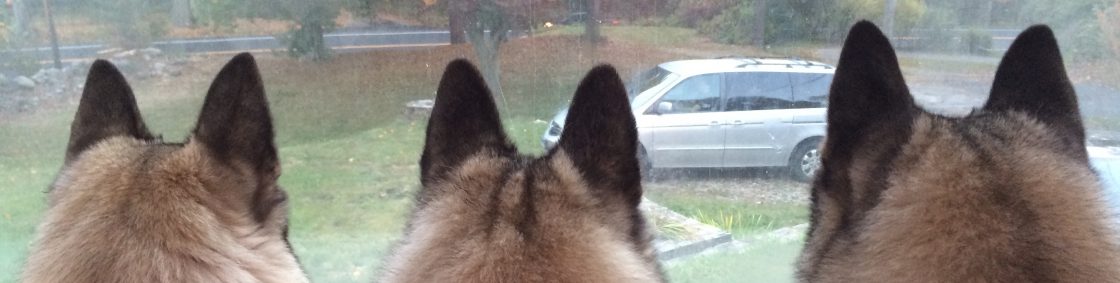
The Elvemel Gang at Work in the Home Office! Today, Adele leads the pack, while Jinx keeps a watch out the window. Linx, left, looks out the other window. They’ve got my back!

Distraction Faction  

Currently, Jinx and Adele, my two Norwegian Elkhound bitches, are leaning over the back of the living room couch, looking out the big bay window through a thin sheer white curtain. “Bark, Bark, bark, bark,” at what they think is a threat. Could be a squirrel, a school bus, or maybe even joggers or bicyclists on the highway. Heaven forbid! But that’s what they do. They alert to any movement that is out of the ordinary, much like if they saw a moose in the wilds of Norway and needed to let the hunter know where to get dinner.

But then it subsides and work can resume. Problem is, one never knows when there is something else to announce. A bird flying by, the delivery man arrives, a busy woodchuck scuttles across the front yard or maybe they smell the foxes playing in the backyard. And you just can’t tune them out, because you never know when they are actually in need of something. Like going outside to take care of business or maybe they are thirsty. Maybe they are up from a nap and want to go outside and play fetch the geo-ball. But now, I hear the howl of the old bitch bark, followed by the puppy yelp. Old bitch is just being annoying but puppy needs to tinkle. As time passes, puppy will learn the different pitches and pauses to have me completely trained to do her bidding. So far this morning she has told me about, two tinkle breaks, one woodchuck, one empty water bowl and the neighbor’s SUV leaving the shared driveway.

Jinx takes a break from a a hard day's work.

Jinx takes a break from a  hard day’s work.

Let Sleeping Dogs Lie

Finally, the bitches are sleeping. The constant rhythm of their breathing, especially the  deep slow exhales from the oldest of the pack, keep me focused, grounded into the work of the day, the writing, the reading, the surfing, the updating, the whatever.

Still silent, I hear the male dog of the house, Linx, downstairs, apart from the girls because, well, it’s that time of the year for Adele. “Pheeft, pheeft, pheeft, pheeft,” strong nails scratching on his favorite cot as he nests to find that perfect place to plant his butt. But wait, he needs a drink, “Thup, thup, thup, thup,” he laps fresh water which spills onto the cool concrete floor where I now hear he’s decided to now rest his well-coiffed pantaloons. All this activity followed by a heavy sigh, “Whew,” as he drifts off into his morning nap dreaming of fjords and forests.

“Crunch, crunch, crunch,” back in the living room, Adele has found her favorite bone, or rather moose antler, with that distinctive sound it makes similar to nails on a blackboard as she gnaws her way to canine bliss. In the background I detect the softest of snores of an old girl in her twilight years.

So join me in establishing the Friday before Independence Day as Take My Dog to Your Work Day, to gain freedom from doggie distractions preventing work from being accomplished. Wait, I tried that once, working off-site in solitude. I remember the silence was stifling and I was unable to concentrate without all my nurturing noises near me. Never mind, I’ll take my dogs to work everyday, any day!

Trail Riding During Mad Dash at Fairfield Hills

Last time I rode on the grounds of Fairfield Hills it was the late 1990s for the Second Company Governor’s Horse Guard Judged Pleasure Ride. This annual event has obstacles to tackle, things to pull, gates to open and executing some pretty scary stuff that you’ve probably never done on your horse before that day. Aside from the mylar balloons that thwarted our team’s chances at glory that year (we came in second) its challenges are nothing compared to what I encountered this past Saturday trail riding during the Mad Dash Adventure Race, but more about that later.

Oz and me head out on a trial ride from the Fairfield Hills Campus

Oz and me are ready  to head out on a trial ride from the Fairfield Hills Campus. Photo Credit: Ray Peterson 

A Sea of Timothy Grasses

This past month, I’ve been blessed to return to ride the hills. A benevolent friend takes her horses and me out to enjoy this hidden beauty nestled in the center of town. I don’t know who or what organization mows those lovely paths around the perimeter of the fields, but thanks! It creates long ribbons of green velvet that cushions unshod hooves at the canter while riders can focus on the majesty around them. The tall grasses, crying to be turned into succulent bales, surround us so we look like floating upper bodies in a sea of timothy.  Unlike higher elevations in town, the sky opens up at these hills with clouds dusting the treetops, when the wind is just right.

A red barn, a brown barn, a ghostly metal pavilion dot the landscape as we bob along. We land at crumbling roads, now more gravel than tarmac, fallen prey to rainwater, erosion and neglect. We dive into open vistas, birds dart from the grassy depths as we gallop by, the good horses taking them in stride, not spooking at nature’s presence. Riding up the hills are especially joyous, faster and bolder, easier for them, more fun for us!  Sweat builds on their shoulders and haunches, signs that the day is getting hotter, and trails traversed longer. Another field, now plowed dark, waiting for seeds, fills the air with earthen scents. As we trot along the far side, silent stream to our left, fallow fields to our right, we slowly come to a walk as we met the long black driveway taking us far from where the cavalry horses and military dogs live. Ahead lies one final burst of pleasure called Yahoo Hill.

But first, we must cross Wasserman Way with rattling trucks and speeding cars, save but one, who slowed to a stop for the safe passage of the horses into the woods. A left turn, exploding up the hill, muscles rippling, hooves reaching, hocks pushing against the soft soil, trampling tall grasses down to the earth, slapping reeds echo as if cut in harvest. Atop the hill, nostrils flaring and heavy breathing from horse and rider, wide smiles all around. A great way to start the day in Newtown, still morning, not yet feeling the heat and hectic-ness of the day. Horses bow heads in agreement.

Oz & Bea plot their ride

Oz & Bea plot their ride! Photo Credit: Ray Peterson 

From Woodlands Into A Mad Dash

On Saturday, our trail ride grew to three gallant steeds and towards the end took us on a magical woodland journey. Blazing through fragrant pricker bush roses and other sweet-smelling native shrubs, disrupting bumble bees and scattering small birds, we came upon Deep Brook. Descending a rocky bank, a pause for an equine drink, up the muddy slope into soft pine needles soaking up splash and muffling footfalls.  Among majestic pines we meander along the river, up a steep incline into the cool forest. We turned right, across the Housatonic Railroad line onto a hidden, ancient trail. We walked along a former railroad bed, still clutching its old steel rails and rotting wooden ties. We weaved between strong maples disrupting the order and symmetry of the forgotten spur.  We emerged from behind the old storehouse at Fairfield Hills.

Mad Dash Race

Getting ready to load onto the trailer after the trail ride. Photo Credit: Rhonda Cullens

We ended at the intersection of Wasserman’s Way and Traders Lane. Waiting for the traffic light to turn to green, the Mad Dash Adventure Race was in full swing. Who knew? As we worked our way back to our respective horse trailers, fire engines sprayed water, tents and flags fluttered, runners scurried through mud pits, over tall wooden walls, and across slippery grass. This got the horses’ attention! As we neared our trailer, a big wave of children came crashing down on us — part of the Mini Dash for kids — dozens of them came barreling at us full speed with glowing t-shirts of orange, lime green and pink. Just before impact, they thinned into single file, banking right and away from us. The horses, prick eared, looking, thinking, moving sideways, waiting, then exhaling, relaxing, and head lowering as we ambled back to the trailer. I remarked to my friend, “Talk about distractions! We should get extra credit on our next judged pleasure ride for this performance.” The horses were great! And so was our ride!

Celebrate “National Purebred Dog Day” May 1

This Friday marks the second annual National Purebred Dog Day (NPDD). Last month, Colorado was the first state to recognize May 1 as NPDD in a joint resolution of the House and Senate. The founder of the day, Puli breeder and dogknobit.com blogger Susi Szeremy, hopes the idea will spread across all 50 states, some of which have a purebred dog as their State Dog, like the Boykin Spaniel, in South Carolina and the Plott, a hunting hound, in neighboring North Carolina.  Her purebred passion is contagious. I was intrigued to learn more about the day, so I contacted her and conducted a Q&A. Check out the video!

Scottish Terrier - Purebred Power

Scottish Terrier – Purebred Power & Puppy Love 

Q: Why Start National Purebred Dog Day? 

A: These have been difficult times for purebred dog ownership and ethical breeders; animal rights advocates and hard line adopt-don’t-shop proponents have painted owners whose dogs were acquired from an ethical breeder, and the breeders of those dogs, with a very broad brush. To hear them speak, the only “good” purebred dog is a rescue, and they continue, there’s no such thing as a “good breeder” because all breeders crank out unhealthy dogs in assembly line fashion only to create pet “overpopulation.”

These statements are simply not true, but in the national conversation about responsible pet ownership, the voice of the purebred dog owner hasn’t been heard. Stories about well-bred purebred dogs acting in service to their country, working as search and rescue dogs, therapy dogs, conservation dogs, and so much more have been largely ignored in favor of “feel good” adoption and rescue stories. Balance is needed in this dialogue.

The emphasis shouldn’t be about whether someone buys a rescue dog, adopts from a shelter, or gets their dog from a respected breed invested in their breed. It should be about potential dog owners doing their homework and getting the best fit of dog for themselves so that they have a long-term relationship with that dog. For some, a mixed breed from the pound is a great match while others prefer the predictability of a purpose-bred dog bred by a breeder who will stand by their puppies. Both choices should be respected.

Old English Sheepdog "Swagger" in the Colorado State House! First State to recognize National Purebred Dog Day.

Old English Sheepdog “Swagger” in the Colorado State House! First State to recognize National Purebred Dog Day.

In the course of research for an article I was writing, I realized with shock that while there is a National Dog Day, National Mutt Day, National Rescue Day, National Puppy Day –  even a National Poop Scoop Day – nothing existed to honor the contributions of purebred dogs. I simply filled the void by creating National Purebred Dog Day in order to celebrate the diversity, heritage and predictability of the purebred dog. From Uggie to Snoopy, from Rin Tin Tin to Lassie, from Brian Griffin to Santa’s Little Helper, and including Presidential dogs, Bo, Barney Bush, Fala and Laddie Boy, purebred dogs have held a place in American culture and history.  Add to this the fact that some of our dog breeds are in danger of extinction, it became obvious to me that creating their own day of recognition has been long overdue.

Q: What will happen on May 1? 
A: I’m encouraging dog owners to get out in the public square with their purebred dogs. There are a great many people who’ve never seen a Borzoi, Lundehund, Puli or Havanese, to name a few,  in person and we know from Meet the Breed venues that the public loves to see our dogs. There will be an eruption of photographs on Facebook, Twitter and other social media platforms this Friday that feature happy owners and their purebred dogs. Many photos will include an “I (heart) Purebred Dogs” sign to show their connection to National Purebred Dog Day (sort of like holding up a “Happy Birthday” sign).  There are a few fun photo challenges on NPDD’s Facebook page that day with prizes generously donated by companies and individuals that believe in the message.

Q: What can purebred dog lovers do on May 1 to show their support? 

A: First, be proud, but humble, to own a purebred dog. Our breeds are living legacies of the cultures that created them for a reason, “museum pieces with a pulse,”  you could say. Learn about their heritage so that it can be shared with others who may only THINK they’re looking at, say, an Alaskan Malamute, until they learn how uniquely adapted the breed is for its native environment. After that, make an “I (heart) Purebred Dogs” sign, get out with your dog in the public square, take a selfie or have someone else take the picture, then post it on Facebook and Twitter using the #purebreddogs and #nationalpurebreddogday hastags. There is strength in numbers and on May 1, I hope to show that there are many of us who love and take pride in our purebred dogs.

Q: Explain the I (Heart) Purebred Dogs sign. Where have you seen them? 

I Heart Purebred Dogs

A: The genesis of the “I (Heart) Purebred Dogs” sign was again rooted in the fact that to my knowledge, it hadn’t been done.  I needed visual shorthand to convey in a photograph that the holder of the sign was “with us” in the sentiment that it’s ok to own a purebred dog. Every year, I’ve been fortunate to have a celebrity pose with the sign for a photograph, and this year it was Mary Carillo, former professional tennis player, Olympic sportscaster, co-host of the Westminster Kennel Club Dog Show, and one fabulous lady. My fantasy is to have it not only become “cool” to pose with the sign, but that more folks will want to.

Who loves purebred dogs? We do!

Who loves purebred dogs? We do!

Q: What is it about purebred dogs that you love? 

A: My first dog was a sweet mixed breed, but I grew up with the family Cairn Terriers (and more than a few rescued dogs along the way). When my own circumstances made it a good time to finally own my very own dog, I got a Puli which has been my breed since 1978. My love of purebred dogs isn’t just for the predictability of some 300 different breeds in the world. I value the history of the cultures from which these dogs came. Most breeds are as much an inherent part of a culture as that culture’s music, art and dress. A Scottish Terrier is instantly recognized as being a natural component of, say, Scottish Highland Games, just as an Irish Wolfhound fits into a St. Patrick’s Day parade, one reason you won’t find a Vizsla as part of either cultural event.

Everybody loves purebred dogs!

Everybody loves purebred dogs! Look at that bloodhound. 

Q: Why did you decide to become a breeder? 
A: Though the Puli is now regarded as an “uncommon” breed, it was considered rare when I got my first one. The breeders were fanciers who encouraged me to show my puppy, and as so often happens, after one show, I was bitten by the bug. I had good mentors who helped me learn the importance of determining “why” one would consider breeding their dog. As my mother used to say, “Just because you can do something doesn’t mean you should.”  After doing my homework, and with the help of more experienced breed friends, I bred my first litter out of which came a National Specialty Best Puppy in Sweeps winner, and his littermate, a multiple group and multiple AOM winning dog. I hesitate to call myself a “breeder” since it’s been a few years since my last litter, and the number of litters I’ve bred in my life hardly put me in the same league as the dedicated people who stand center ring at Eukanuba or Westminster for “Breeder of the Year” consideration. When the time is right, my dogs are all health tested and cleared, and there’s a compelling reason to do so, I’d like to breed a litter again some day. 

Let’s Celebrate Purebred Dogs!

#purebreddogs and #nationalpurebreddogday gets your voice heard on Twitter and Facebook

-“Like” NPDD on FBhttps://www.facebook.com/NationalPurebredDogDay?ref=hl

Watch the NPDD videohttps://youtu.be/DwbWOrmkLmg

– Game Day plan: http://dogknobit.com/2015/04/22/game-day-and-the-game-plan/

Download the I (Heart) Purebred Dogs sign:  To download the “I (heart) Purebred Dogs” sign, click on one of the links below. You DO NOT need to open a Dropbox account to access these files, simply exit out of the prompt window that wants you to open an account and proceed to the links.

For the PDF format:  https://www.dropbox.com/s/7g5n3tlt5y7zrom/I%20Love%20Purebred%20Dogs%20pdf.pdf?dl=0

For the PNG format: https://www.dropbox.com/s/k2gvp5ee6ff75j4/I%20Love%20Purebred%20Dogs%20png.png?dl=0

What Healthy Foods to Have on Hand for Pets

By Lisa Peterson

Many of us who have pets always seem to be opening the refrigerator or cupboard to share our food with them. Most of us do this to provide healthy choices for our dogs but some of us who keep horses on our property have handy hand-outs to promote health and well-being for horses too! An old friend from a writer’s group picked up on several of these equine and canine foods and featured them today on the FitBottomedGirls blog.

Beyond Hay for Horses 

For horses there are severals things in the pantry that can be helpful. When selecting human food to feed your horse make sure it’s close to their natural diet as horses have a sensitive and complex digestive system. This means no chocolate breakfast bars or teriyaki chicken. The best choice, of course, is carrots! Carrots are loaded with beta-carotene and Vitamin A. They offer a nice treat to the horse for greetings and farewells. They are best served in long thin slices to safeguard from choking. Many prefer carrots picked fresh from the garden (or produce section) with their green tops intact for an added anti-oxidant boost.

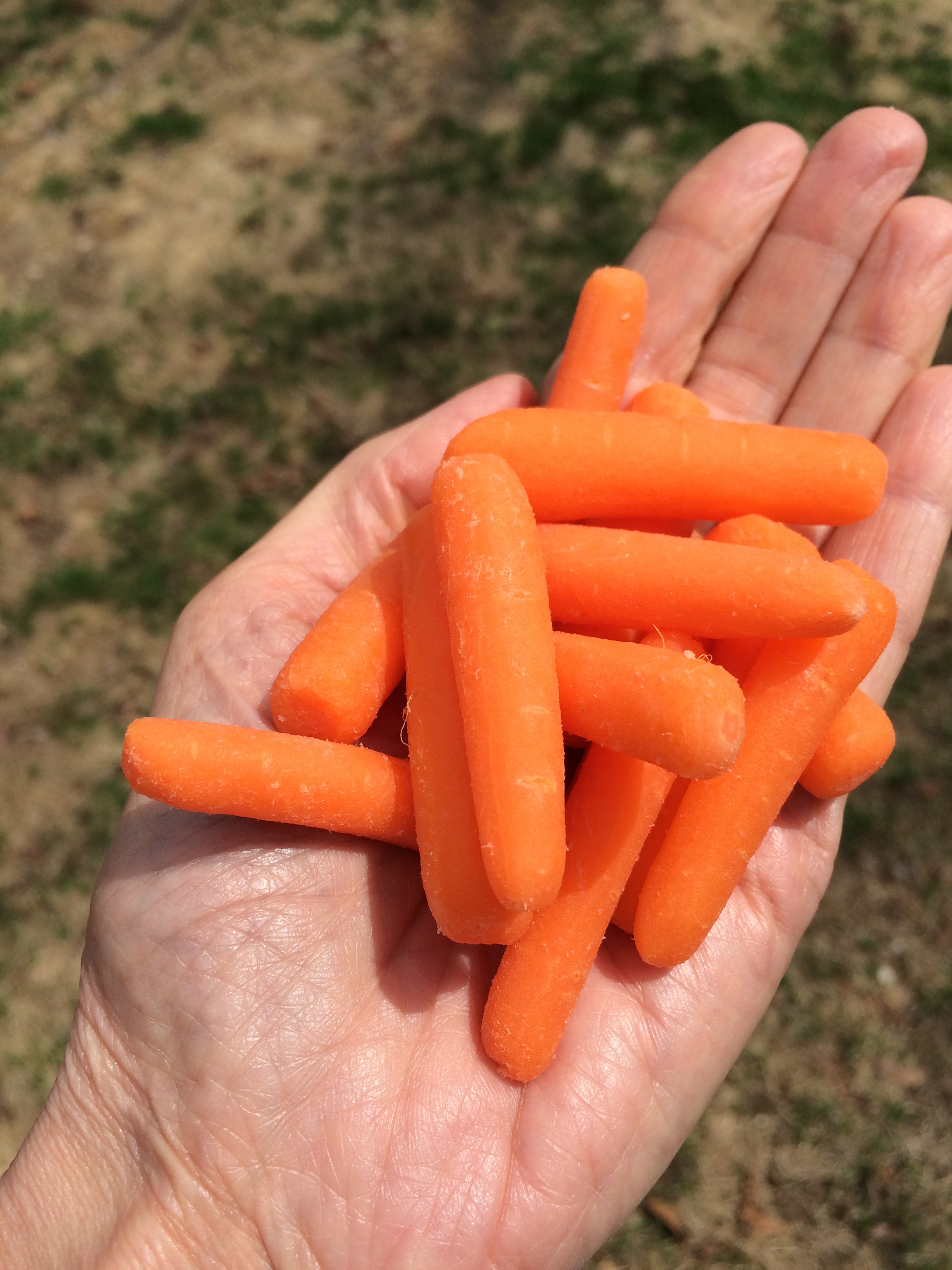
Baby carrots are a great way to feed treats to your horse!

Baby carrots are a great way to feed treats to your horse!

One treat that is good only very occasionally are sugar cubes. Too much sugar is not good for any being, but once in a while a sweet little treat that usually hangs around the house for fancy parties in grandma’s silver sugar bowl is a horse’s delight. They can make great training treats for your horse as the ultimate reward.

Have a finicky drinker? Maybe you are worried your horse is getting dehydrated, especially in winter, when water can be ice cold and he’s not drinking it. Try adding a little warm apple juice to the water bucket. This sweet taste may entice your horse to slurp it down. Not drinking and getting dehydrated could put them at risk for colic, which could turn deadly.

And finally, an apple a day also keeps the horse doctor away! Sharing this crisp fruit with your equine friend will keep you apprised of how his teeth are doing. If your horse is looking a little thin, it may be because he is having trouble chewing. Feeding him apple slices are good nutritionally but will also show you whether food is falling out of his mouth, an indication of pain from long teeth or brought edges. Watching him eat apples or smaller pieces will give you a clue to his oral health and whether you need to call the horse dentist.

Daily Dose for Dogs

Many horse owners have dogs too!  And raw carrots are the cross-species training treat found in most pet owners homes. This low calorie, crunchy treat is great for dog’s needing reduced calories but still provides that crunch for oral health to reduce tartar accumulation on dog’s teeth. Baby carrots cut in quarters are the perfect size for treating.

Jinx trying to convince Ray that Nachos are good for dogs!

Jinx trying to convince Ray that Nachos are good for dogs!

Keeping your dog fit and healthy can also include some readily available people foods, surprisingly found in cans. Got a fat dog? Reducing fido’s waistline needs more than upping the daily walk. Here’s a trick to easily reduce calories without decreasing the volume of what’s in the bowl. If you feed your dog a cup of kibble per meal, try reducing the kibble by half a cup and replace the other half cup with canned string beans. This lower calorie alternative is tasty and will ease the transition of reducing the amount at meal time. Only feed the replacement beans for two weeks and then resume the regular ration of kibble. Still need to loose more weight? Feed regular rations for another two weeks and then replace rations with half green beans again.

Another super human food for dogs is canned pumpkin or pureed pumpkin. This high in fiber food that makes its annual appearance at Thanksgiving, can be used in a pinch if your dog needs a binding meal after bouts of diarrhea. Adding a few teaspoons to a few tablespoons depending on the size of the dog, can also help with canine constipation. Providing pumpkin keeps Rover regular.

String Cheese Please!

String Cheese Please!

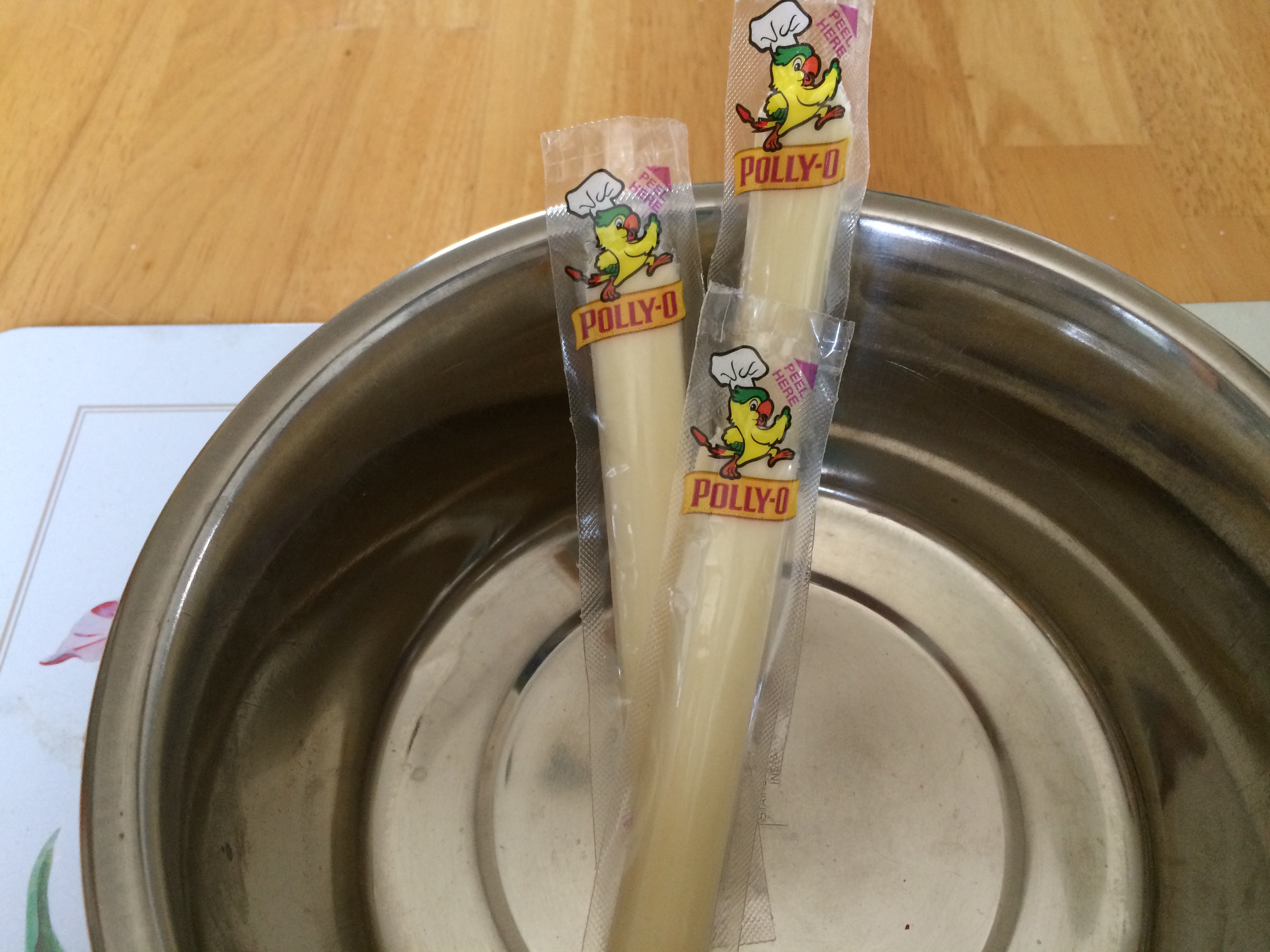
A ubiquitous food in most refrigerator’s is mozzarella string cheese. The low fat version can be a much healthier alternative for training treats that anything you can buy at the pet superstore, many of which are loaded with calories, artificial preservatives and colors. Plus, this tasty treat can be placed in your mouth during training exercises which will draw your dog’s attention to your face, Once she is gazing into your eyes, she may actually listen to what you are asking her to do!

A General’s War Horse – Civil War Style

While today marks the 150th Anniversary of President Lincoln’s Assassination, it also reminds us of the Civil War’s other tragedies, including the loss of many lives, both human and animal. Unaware of the politics of war, a Union horse, born in Connecticut, was captured and became a Confederate General’s favorite mount. Unlike his General, Little Sorrel survived the war. Here is his story: 
One of the Civil War’s most colorful commanders was General Thomas “Stonewall” Jackson of the Confederate Army. During the war between the states, many generals had a string of horses, some with a favorite mount used for riding into battle.
Jackson’s most popular horse was foaled around 1850 on the Noah Collins Farm in Somers, Connecticut. According to Charles Worman’s book, Civil War Animal Heroes, Mascots, Pets and War Horses (http://www.civilwar-books.com), “Collins sold him to an Army buyer and he was one of number of mounts on a Union Supply train captured by Jackson’s force at Harper’s Ferry in 1861. Then-Colonel Jackson took several horses, one of which was originally intended as a gift for his wife and initially given the name of Fancy. But Jackson was so taken with Fancy’s easy gait and steady temperament that he retained the animal for his own use.”
Little Sorrel 
At some point Fancy’s name was changed to Little Sorrel, most likely to match his color.  Sorrel being a deep red coloring, sometimes with a flaxen mane and tail. According to connecticuthistory.org, Little Sorrel was a Morgan horse, descended from the original horse owned by Justin Morgan and whelped in Springfield, Massachusetts in 1789. This truly American breed was favored by Southern soldiers and Western cowboys alike for its calm temperament, small size and good health.
According to Major Henry Douglas, who rode with Stonewall, Little Sorrel was a “plebeian-looking little beast, not a chestnut; he was stocky and well-made, round barreled, close coupled, good shoulder, excellent legs and feet, not fourteen hands high, of boundless endurance, good appetite, good but heavy head and neck, a natural pacer with little action and no style.”
Little Sorrel After General Jackson's Death

Little Sorrel After General Jackson’s Death 

Several times Little Sorrel was accosted for trinkets from the famed general. A Union prisoner, being held close to the rump of the animal as they waited for the General to come out of his tent to determine his fate, started to pull hairs from his tail. Upon discovery, the General asked him “Why are you tearing the hair out of my horse’s tail?” to which the bemused prisoner replied, “Ah, General, each one of these hairs is worth a dollar in New York.” Apparently the general found this so amusing that the prisoner was not questioned further for Union secrets.
During the Battle of Chancellorsville Jackson was astride his favorite mount when the general was accidentally shot by friendly fire in 1863. In the confusing aftermath a terrified Little Sorrel became lost. A few days later Jackson died of his wounds and his favorite horse was not accounted for yet to join the general’s funeral procession. Eventually, he was found in Virginia and sent to the general’s widow in North Carolina by the Governor.
Post-war Celebrity 
In his post-war years, Little Sorrel went to live with the general’s father-in-law, a preacher who rode him to church for many years. In 1884, he even made an appearance — at age 33 — at the Hagerstown Agricultural Fair in Lexington, VA. Again, he was approached by many fairgoers, who plucked his mane and tail hairs, almost to extinction.  In the day hair, both human and animal, where used to make jewelry by braiding little bits of hair into rings, bracelets and necklaces.
Eventually, Little Sorrel was cared for by the Virginia Military Institute (VMI) for the reminder of his life. In the end he broke his back in an accident and died shortly after in 1886. His obituary in the local papers said he died at the Confederate Soldiers Home in Richmond aged 36 years. His body was sent to a taxidermist before returning to Richmond. Apparently the bones of the horse were sent to the taxidermist for payment, but eventually they found their way back to VMI in the 1940s.
Little Sorrel mounted after death at the Virginia Military Institute

Little Sorrel mounted after death at the Virginia Military Institute

In 1950, the life-sized stuffed war horse went back to VMI for display in their museum. In 1997, rather than let the bones remain in a museum storeroom, they were cremated and buried with full military honors at the base of a life-sized bronze statue of Jackson at VMI, where the general had once taught. Today, the taxidermy horse still stands at the VMI museum. Learn more here: http://www.vmi.edu/MuseumSystem/.
Little Sorrel Lane 
In 1991 the town of Somers decided it needed its own tribute to the great horse foaled on its lands. And so “Little Sorrel Lane” was dedicated with a ceremony by the Somers Historical Society, complete with rifle salute. This story reminds us of the important contribution that horses made during the civil war. In honor of their role, why not make a donation to the last remaining unit of the U.S. Cavalry, the Second Company Governor’s Horse Guard, located in Newtown, Connecticut. They desperately need our help as state budget cuts loom. Let’s keep their tradition alive to honor the war horses of our past.  Make a donation at the GoFundMe site: http://www.gofundme.com/pblvg4. I’d hate to see the last remaining vestige of the U.S. Cavalry be reduced to nothing more than a street named  “2GHG Lane” at Fairfield Hills.

Morris & Essex Kennel Club Dog Show ~ Redux

Since its commemorative reincarnation a decade ago, the Morris and Essex Kennel Club dog show has become a modern classic with a serious nod to its traditional roots. A new book just published, The Golden Age of Dog Shows: Morris & Essex Kennel Club, 1927-1957, not only celebrates those roots but raises funds to help keep the tradition alive. With a forward by William Secord, famed canine fine art historian and gallery owner, this photo-filled book promises not to disappoint.

Morris & Essex Kennel Club 1927-1957 Book Cover

Morris & Essex Kennel Club 1927-1957 Book Cover

Last month, as part of Women’s History Month, I included M&E’s founder, Geraldine Rockefeller Dodge, as my nominee for important women in history. You can read the tribute below, which first appeared in my weekly column Lisa Unleashed published in The Newtown Bee on March 13, 2015:

Since 1995 U.S. Presidents have passed resolutions declaring March as Women’s History Month. According to womenshistorymonth.gov the celebration is a “tribute to the generations of women whose commitment to nature and the planet have proved invaluable to society.”  Nature and the planet are two pretty broad categories when singling out individuals who have made an impact. Dogs are also part of nature and the canine-human bond is felt all over the planet. As such, I’d like to contribute my nominations of one woman whose commitment to ‘dogs’ have “proved invaluable to society.”

Many have called Geraldine Rockefeller Dodge the “First Lady of Dogdom” of the 20th century. Daughter of William Rockefeller Jr., as well as John D. Rockefeller, Sr.’s niece, she along with her husband, Marcellus Hartley Dodge, heir to the Remington Arms fortune, founded the Morris & Essex Kennel Club in the 1920s. When they married in 1907 at the Fifth Avenue mansion of her father in Manhattan, the newspapers called them “the richest couple in the world.”

Morris & Essex Dog Show 

Lisa & Gail show off their hats at Morris & Essex

Lisa & Gail show off their hats at Morris & Essex in October 2010

With this vast wealth each year from 1927 to 1957 Mrs. Dodge hosted the famed Morris & Essex dog show for thousands of dogs. Dozens of tents decorated the polo field of their vast estate “Giralda Farms” in Madison, New Jersey as top breeders and handlers came to exhibit their purebred dogs. For decades it was not only a valuable place to come study dogs but also a stop on the social scene. It was a special show, with Mrs. Dodge offering sterling trophies, lavish flower decorations, and the famed boxed lunch for all the exhibitors in attendance.

M&E had become the most prestigious dog show in the country, more important to some breeders and fanciers, than even Westminster, with around 4,000 dogs of all breeds in attendance. A win at M&E was a stamp of approval of a well-bred dog. For breeders, it was a paradise to come and see fine examples of dogs to study and watch as one was determining how a great dog or bitch might fit into a breeding program to improve their line.  As a dog breeder herself, Mrs. Dodge understood the importance of a gathering place to see many well-bred dogs in action together to further the sport of purebred dogs. Show fanciers in the sport had large kennels and many litters of great dogs planned for the show ring also made their way into American homes as pets.  But like all good breeders, the welfare of all dogs, whether we bred them or not, whether purebred or not, was equally important. Mrs. Dodge, herself a Best-in-Show judge at Westminster, also saw to it that those dogs less fortunate than her prized pups did not stay in that station of life for long.

St. Hubert’s Giralda – Founded in 1939 as a non-profit shelter, Mrs. Dodge wanted to not only advanced the study of breeding dogs but also to care for those injured and lost in her community. In addition, the shelter named after the patron of lost animals, at one time offered animal control services to six towns in Morris County, New Jersey. Today, the organization she founded in her backyard, is known as St. Hubert’s Animal Welfare Center and its expanded mission states its, “dedication to the humane treatment of animals. Its services to the community include pet adoption and animal rescue, animal assisted therapy, humane education, dog training, and pet loss support.

In 2005, shortly after Hurricane Katrina, St. Hubert’s agreed to take in the first of many airlifts of displaced dogs from Louisiana. As part of a team from AKC, who had funded the airlift through disaster donations, I waited at St. Hubert’s before heading to the airport to unload dogs. At one point I found myself face-to-face with some of the remaining artifacts from Mrs. Dodge’s life with dogs in a meeting room. As I glanced at trophies, books and other ephemera, I was struck by her depth of care and compassion for all dogs from show dogs to just those that needed to survive.

Many people today, including some dog show people, have no idea who Geraldine Rockefeller Dodge was, or her dedication to the welfare of all dogs. It’s heartwarming that nearly 50 years after the last Morris & Essex Dog Show, her legacy of St. Hubert’s Giralda lives on by helping a plane load of dogs who had lost their way after a devastating hurricane. Or also in 2005, the first ‘revived’ Morris & Essex dog show, held once every 5 years, would be established to keep her vision alive on the dog show front as well. This is the legacy of a great woman in history who has advanced man’s best friend and their care which in my opinion “have proved invaluable to society.”

A Gentleman’s Dog – Revolutionary War Style

In a way, we have George Washington’s love of riding horses and breeding fox hounds to thank for his iconic role in the American Revolution. More importantly he upheld the standard that, even in wartime, a gentleman’s dog is not to be messed with. One of my favorite books, General Howe’s Dog: George Washington, the Battle of Germantown, and the Dog Who Crossed Enemy Lines, by Caroline Tiger (Chamberlain Bros., 2005) captures a little know act of kindness between opposing generals after a battle.

GeneralHowesDogCover001

Homesick for Hounds 

From Tiger’s well-written and researched account we learn that in 1775 Washington was homesick for his horses and hounds while a Virginia Delegate at the Second Continental Congress in Philadelphia. Away from his stable full of horses and his kennel full of hounds in Mount Vernon, Virginia, he brought one of his favorite hounds, Sweep Lips, to stay with him for comfort. One day as Washington walked Sweet Lips in the city, he came across the wife of Philadelphia’s Mayor Samuel Powell, an influential politician who also loved to fox hunt. After a dinner at the mayor’s home and through an  introduction to the Gloucester Hunting Club in nearby New Jersey, Washington met other influential men who eventually secured his appointment as command of the struggling Continental Army. Tiger suggests we should thank Sweet Lips for being a chick magnet on the streets of Philadelphia and as a result securing our independence.

A fine pack of PennMaryDel Hounds

A fine pack of PennMaryDel Hounds

However, freedom didn’t come easy. Commander of the British troops, General William Howe, triumphed over Washington for years in many battles, always seeming to let the General retreat enough to fight another day. During the war, they politely wrote letters to each other complaining about food supply blockades, troop behavior, and burning buildings among other unfair tactics of war. In 1776, after the Delaware River crossing on Christmas morning, followed by victory at the Battle of Trenton against the Hessians, luck was beginning to change for the Continental soldiers. Washington, who likened war to hunting, foolishly galloped to the front lines during this battle and said afterwards, “It’s a fine fox chase, my boys.”

By September 1777, the British had captured Philadelphia, considered the nation’s capital, and encamped their troops northwest of the city in Germantown. Washington attacked in Germantown and nearly defeated Howe, before both sides retreated amidst confusion, fog and intermingling of troops. While Washington’s troops retreated back to their encampment at Pennypacker’s Mill, a fox terrier had joined them. Once discovered, one of Washington’s men read the inscription on the collar only to learn that the small dog belonged to General Howe. In all the confusion of the battle, the dog had followed them for 25 miles back to their camp.

General Howe’s Dog

Washington had to make a decision about this new interloper. According to the rules of military engagement at the time, dogs couldn’t be kept as prisoners of war and a man’s personal property should be returned. What to do? Being a gentleman, and ignoring an officer’s suggestion to make the dog a mascot, the General asked Alexander Hamilton, would who go on to become the first Secretary of the Treasury after serving as Washington’s aide-de-camp, to write a note to Howe.

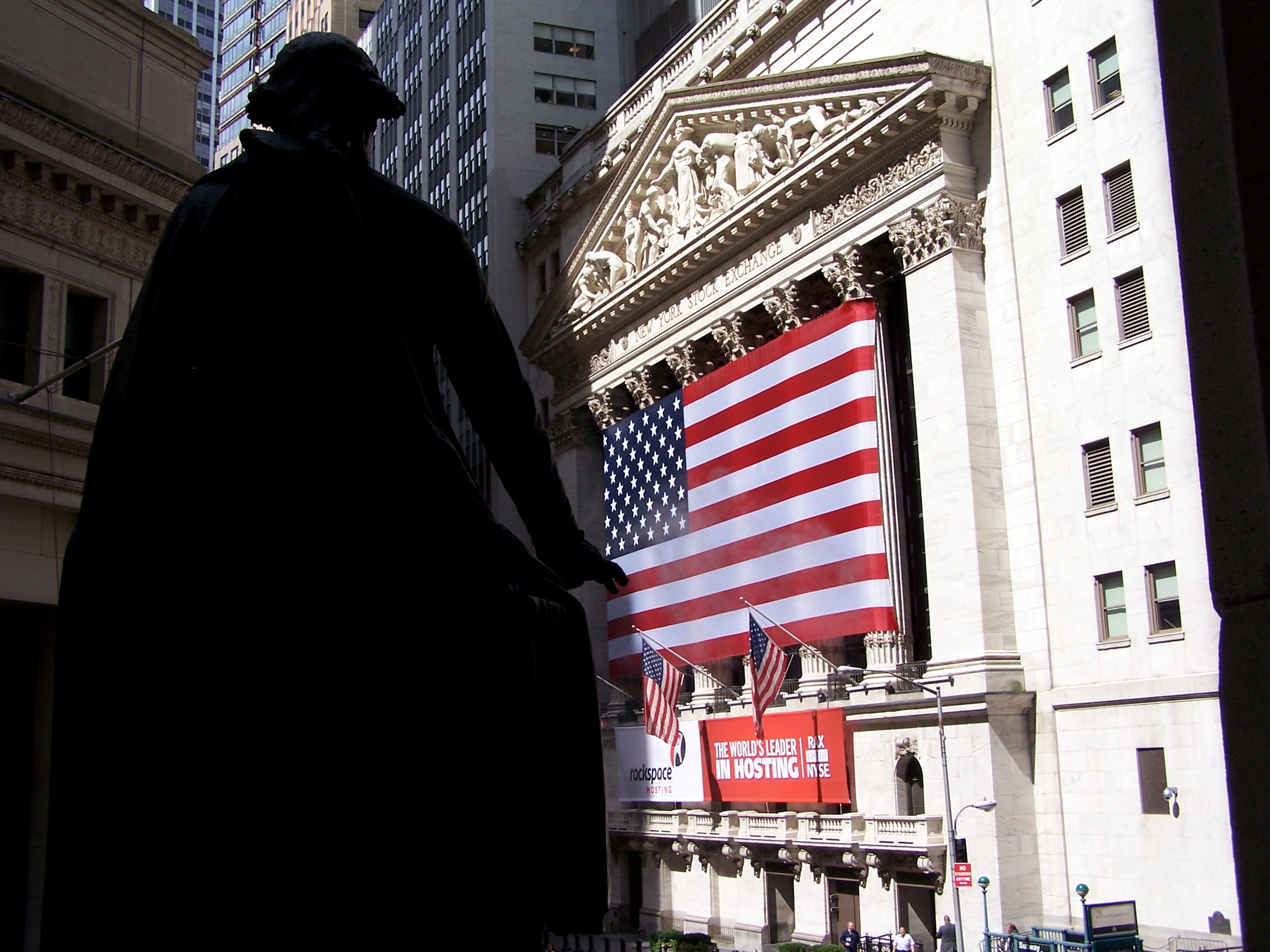
George Washington looks over at the New York Stock Exchange

George Washington looks over at the New York Stock Exchange

The note as reproduced in the book reads: “Note to Sir William Howe. General Washington’s compliments to General Howe, does himself the pleasure to return him a  Dog, which accidentally fell into his hands, and by the inscription on the collar, appears to belong to General Howe. October 6th, 1777.”

Tiger goes on to describe the dog’s return via a solider on horseback traveling 25 miles back to Germantown with a white flag in one hand and the little terrier in the other. She speculated that British troops most likely laughed at this solider deep in enemy territory carrying a little dog. One of Howe’s men wrote about the incident later: “The General seemed most pleased at the return of the dog. He took him upon his lap, seemingly uncaring that the mud from the dog’s feet soiled his tunic. Whilst he stroked the dog, he discovered a tightly folded message that had been secreted under the dog’s wide collar. The General read the message, which seemed to have a good effect upon him. Although I know not what is said, it is likely to have been penned by the commander of the rebellion.”

George Washington Statue on the steps of Federal Hall, New York City, to commemorate his first inaugural speech at that site.

George Washington Statue on the steps of Federal Hall, New York City, to commemorate his first inaugural speech at that site.

Unfortunately, as with much of history, Tiger tells us there is no record of what that second note tucked into the terrier’s collar might have said or what General Howe wrote back to Washington in return. She does tell us that, “We know that he appreciated the gesture, since later he referred to the incident as ‘an honorable act of a gentleman.’” To learn more about this book and its author visit www.carolinetiger.com.

Tobey Rimes – World’s Richest Dog or Urban Legend?

Several years ago a New York Daily News reporter called my office and asked what I knew about the world’s richest dog, a poodle named Tobey Rimes.  His inheritance was passed down from generations of poodles descended from the original Tobey of the 1930s, owned by Ella Wendel, the last surviving heir to a vast Manhattan real estate fortune built up over two centuries alongside the Astors.

Wendel never married and lived her entire life with her siblings in a Fifth Avenue mansion, at 39th street, build by her father in 1856 surrounded by a large yard. By the early 20th Century the house had been dubbed the “House of Mystery” since the front door and first floor windows had been shuttered for more than a quarter century. By 1930, all her siblings had died and it was just Ella and her dog living in the aging four-story brick and brownstone mansion.

An Urban Legend 

Intrigued, I checked AKC pedigrees to see if there was any truth to these Tobey Rimes rumors, but without current Tobey’s owner’s name it was impossible to track. But the proliferation of misinformation still haunts online:

From MNN.com – “Ella Wendel’s dog: $92 million – Poodle Tobey Rimes inherited a staggering $92 million…  he is “the poster dog for the benefits of trust funds and compounding interest” since he descended from a poodle who got his millions from a trust of $30 million set up by Ella Wendel.”

From vice.com – “Toby Rimes: Worth $80 million – Toby’s great-great-great-dogfather, the original Toby, was the pampered poodle of crazy rich lady Ella Wendel, who left him all her money when she died in 1931. The endowment, passed from dog to dog ever since…”

From PetPlan.com – Toby Rimes the dog – £30 million – Ella Wendel originally left her pet poodle Toby £15million in 1931. Since then there have been a succession of pampered pooches, with the current heir being Toby Rimes.

World's Richest Dog?

World’s Richest Dog?

What’s The Real Story 

According to press reports as early as 1915, Ella Wendel’s little dog occupied the yard of the mansion. “In that lot are on old tree and a dog house and the sisters wait until the dark so that they may take their exercise” and not be looked upon by prying eyes from the new skyscrapers. The vacant lot used to be their grass-covered yard and some newspapers called it the “million dollar dog run” since many a developer offered that sum to purchase it, with Miss Wendel always refusing by stating that her dog needed an exercise area.

By 1930, her attorneys advised her to move since it was costing her $1,000 a day in taxes and expenses to live there. She told them it was her home and Tobey “needed a place to run around in.” So not only, did she maintain the million dollar dog run for her beloved pet, but kept an aging mansion without electricity or modern comforts just so the dog could have an indoor space as well. In addition, she had a small replica of her four-poster bed made for him as well as a dining table covered in red velvet, just like hers.

The Wendels maintained a summer home at Irvington, New York. According to the 1938 book, “I Remember,” by Jennie Prince Black, her neighbor Ella Wendel lamented to a neighbor that she was upset because, “The little dog has a stone in his foot.” He suggested that she get her driveway paved and then the stones would not be a problem to the dog. A local business did the work and presented her with a $20,000 bill for the driveway work from the house to the gate.

On March 15, 1931 Ella Wendel died. The next day The New York Times reported that “Tobey, a fat white poodle, lay beside the coffin” in the House of Mystery.  At one point Tobey followed the clergyman into the dining room where he went to put on his vestments, studied him for a while, decided he was friendly and went back to his post at the bottom of his master’s coffin.

“What will become of the dog. Tobey, who was not settled last night,” the reporter asked. Later The Times stated, “His little bed and little table were removed. He had been assigned to the kitchen, where three servants, left as caretakers in the bleak house, took care of him.”

The Passing of Tobey 

Tobey lived another 18 months while the executors probated the will and readied the mansion for demolition. His death was widely reported on Oct. 5, 1933.  Reports said he had become ‘snappish’ and ill. The statement from the executors read, “It was necessary last week to have a skilled veterinarian bring the dog’s life to a painless end. In natural course, he could not have lived much longer.*** The executors have followed Miss Ella’s wishes as to the disposal of the dog, and he now sleeps peacefully alongside his predecessors.” He was buried in a green plot, behind the summer home in Irvington, N.Y. along with his predecessors, all poodles and all named Tobey.

The Medina Daily Journal read: “With the closing of the Wendel Mansion on Fifth Avenue recently, that the “richest dog in the world” is dead. Toby, a French poodle,  occupied a prominent place in the spotlight when his mistress, Ella Wendel, died in 1931, leaving an estate of $100,000,000. It was said Wendel lavished more affection on the dog than any other living human.Toby had his own bed, a velvet-covered dining table, and a plot of ground to play in, which his mistress declined an offer more than one million dollars, “because it was Toby’s exercise place.” Painlessly destroyed, the little dog sleeps in the grounds of the Wendel summer home in Irvington, NY. in accordance with the last will of his mistress.”

It seems fitting that Miss Ella was the last of her line and well as her poodle Tobey. I think the modern day Tobey Rimes is made up by mixing historical fact with rumor. Whatever the truth, there is never any mention in press reports of the day that the dog got any money, but perhaps that her mansion was made available for him to live in until he died before it would be given to Drew University, one of 14 major beneficiaries. Here’s one clue: Mrs. Black in her memoir claims it was the same dog (with the stone in his foot) that held up the sale of the Fifth Avenue property because, “Miss Wendel insisted that her pet must have a place in which to exist.”

Outer Banks Horses – More Than Just Misty

Marguerite Henry’s classic book Misty of Chincoteague certainly fueled my love of horses and countless other pony-crazed little girls for generations. The fictional tale written in the late 1940s features a herd of small wild horses on Assateague, a barrier island off the coast of Maryland and Virginia. While Misty and her adventures made wild ponies famous, there are several other herds of wild horses scattered among the Outer Banks off North Carolina. How these “banker ponies” got there is a mystery. They have been there for centuries. Legend has it they swam ashore to the barrier islands from shipwrecks of early Spanish and English explorers.

Shackleford Horse

Shackleford Horse

Shackleford Banks Herd

Shackleford Banks, situated off the coast of North Carolina, is the southern-most barrier island of Cape Lookout National Seashore. The land is owned by the federal government and managed by the National Parks Service (NPS). Living on the 9-mile long island, filled with nutrient-rich native grasses and sea oats, are the Shackleford Horses. This hardy herd fluctuating between 110 and 130 wild horses boasts an array of colors from bays and chestnuts to those with flaxen manes and tails. Proudly standing between 11 and 13 hands tall, they wear thick coats with coarse, long manes to protect them from hurricane force winds and damp sea fog. With keen instincts, stallions can quickly spot trouble on the horizon (or tourists!) to make that fight or flight decision to protect their ‘harems’ as well as mares protecting their newborn foals.

Today, the Shackleford horses are co-managed by the NPS, who owns the land, and the Foundation for Shackleford Horses, Inc. (FSH), a North Carolina non-profit corporation and an IRS 501(c)(3) charity founded nearly two decades ago and run completely by volunteers. The foundation’s mission is to “Protect and Preserve” the Shackleford herd. One of its first goals was to find a permanent way to do just that.

Awaiting a new home! Visit Schacklefordhorses.org

Awaiting a new home! Visit Schacklefordhorses.org

Federal Protection 

In gaining federal protection, scientists needed to establish a genetic link to their historic status as a native breed. Oral histories and quotes from generations of coastal North Carolinians are important, such as “They’ve always been there, they were here when our people came; they swam ashore off sinking ships.”  But having sound scientific research and evidence would be even better.

In 1997, researchers, after studying DNA blood samples, established a genetic link to the early Spanish horses. Most importantly, one very old genetic variant called, “Q-ac” surfaced. This marker was found in two other older equine populations, the Puerto Rican Paso Finos and the Pryor Mountain mustangs in Montana. Its appearance is significant as it can easily be lost through some called “genetic drift” which means it would have disappeared quickly if non-Spanish modern horses were introduced into the herd along the way. With scientific evidence in hand, the FSH was able to move forward with the “Shackleford Banks Wild Horses Protection Act” and a year later President Clinton signed the bill into law.  The FSH now manages the herd in partnership with the NPS by use of birth control darts, rescuing some that wouldn’t survive on their own and removing others off the island for adoption to control the herd size for optimal survival.

Scratch me here!

Scratch me here!

Last weekend, I had the pleasure of meeting Carolyn Mason, who helped start the foundation and keeps the adoptees and rescues on her farm on the mainland. Her family has been in the area for generations. Watching her commune with the ponies was like seeing an artist nurture her canvas. She knew all their moods, all their habits, all their lineage and history. She had been caring for them for decades not only against the ravages of hurricanes on the outer banks but in her backyard. She spoke of each horse on the island, not as the number they are assigned, but the names they had been given like Spirit and Merlin. At her farm, I met “Aftermath” born during Hurricane Irene. Her knowledge includes knowing matriarchal breeding lines, knowing how many foals a mare had and to which stallion. Listening to her was like watching an episode of National Geographic. Mason watches this wild herd from a far, yet intimately stewarding them, like the gentle stroke of an artist’s hand, wanting to capture the beauty of nature on the canvas but not disturbing the natural setting.

Schackleford Horse Diego

Schackleford Horse Diego

With the help of dedicated foundation volunteers like Mason the FSH continues their historic, genetic, health and cultural research. Herd numbers are still over 100 horses with room for sustainable growth and genetic diversity. This stewardship of a centuries-old herd is the kind of story that hopefully future generations of children will discover just as I discovered Misty over a half century ago.

Some great resources on the Shackleford Horses:

Horses Have Birthdays Too!

Last week we learned husbands have birthdays and hounds have human age equivalents. But what about horses? Unlike purebred dogs, most horses don’t come with registration papers with their birthday proudly displayed, so it’s a guessing game. Even Thoroughbreds registered with The Jockey Club lose their actual birthdays to the convenient New Year’s Day in order to have a consistent racing year.

Before you can calculate a horse’s human age equivalents, you have to determine the horse’s age in actual years. For centuries horse traders have peered into the equine mouth to look for clues. Horses, like dogs and humans, have two sets of teeth, their baby or ‘milk teeth’ and their permanent teeth. Most horses have all their permanent teeth by age 5 and are considered to have a ‘full mouth.’

It’s easy to look at a very young horse’s mouth and see which milk teeth have appeared or been replaced by permanent teeth in determining his age. Once a horse is considered ‘aged’ (9-years-old and beyond) there are other more subtle signs to look for. Unlike dogs and humans, horse’s permanent teeth continue to grow throughout their life. This phenomena ensure a lifetime of grass grazing and grain grinding. As they age, horse teeth also change shape and develop markings.

As a Thoroughbred registered with The Jockey Club, Mikey's birthday is always January 1st.

As a Thoroughbred registered with The Jockey Club, Mikey’s birthday is always January 1st.

Cups, Stars, Grooves, and Hooks

Cups: The shape of the tooth changes from rectangular to triangular as the horse ages. When you open the mouth of a young horse and view the bottom front teeth (center and corner incisors) on the grinding surface from above, you will see dark rectangular centers called ‘cups.’ These cups are visible on all incisors by age 5, but slowly disappear from the teeth progressively. They fade first on the bottom from the center teeth out to the corners and then on the top from the center out to the corners, so by age 11 all the cups should be gone.

Stars: As the cups begin to disappear, a ‘dental star’ appears on the grinding surface towards the front of the tooth. This yellow-colored spot starts out rectangular and becomes rounded with age and will eventually replace the cup on each incisor. The stars begin to show up around age 8 on the center teeth and appear on the corners by age 11.

Galvayne’s Groove: This dark-colored groove is located on the incisors at the upper corner of the mouth, just before the canine teeth. This groove won’t appear until the horse is around 10 years old. It appears first at the top of the tooth and works it way down the front of the tooth. It reaches the middle of the tooth by age 15. Then it continues down to the bottom of the tooth by age 20. Then it reverses itself and starts to disappear from the top of the tooth, so by age 25 it’s only visible on the lower portion of the tooth. By age 30 it should have disappeared from the tooth.

Hooks: Another clue to determining age can be looking for hooks on the top corner incisors. Uneven wear on the upper and lower corner incisors can cause a hook to form at the back and bottom on the top corner incisor. The first hook appears at age 7 and disappears at age 9. Then it re-appears at age 11 and remains until the mid-teens.

Another indicator of age can be seen by viewing the horse’s mouth in profile.  Lifting the lip take a look at his bite from the side, the older the horse, the longer and more angled forward his permanent teeth will be. For you trivia buffs out there, the term “long in the tooth” comes from the horse world and refers to this observation. This term also gave birth to a piece of sound advice: “Don’t look a gift horse in the mouth!”

Horse Age in Human Years 

Is there an equivalent human age for horses? It appears about a decade ago, as part of a marketing campaign from Pfizer Animal Health (now Zoetis) to promote their Strongid daily wormer, they released The Age Relationship Chart which calculates a horse’s age in human years.  A rough estimate said that horses are basically 6.5 years old when they are born (because when they are born they can stand and run) and will age that fast (in human years) until they reach four. After that they settle into a 2.5 human years for every actual horse year for the rest of his life.

According to the 2003 press release from Equine Resources International, LLC, “Horses go through the same life cycles as do humans. They have distinct childhood, adolescence, puberty, maturity and geriatric phases of their lives,” said Dan Kramer, Pfizer’s equine market manager. “This chart will give horse owners added insight into their horse’s life stages and greater understanding of the issues at each stage. For example, a 22-year old horse would equate to a human of age 65.5. A horse that is 36 years old would be celebrating its 100th birthday if it was a person.”

HorseAgeHumanYearsChart