Happy Birthday – In Dog Years!

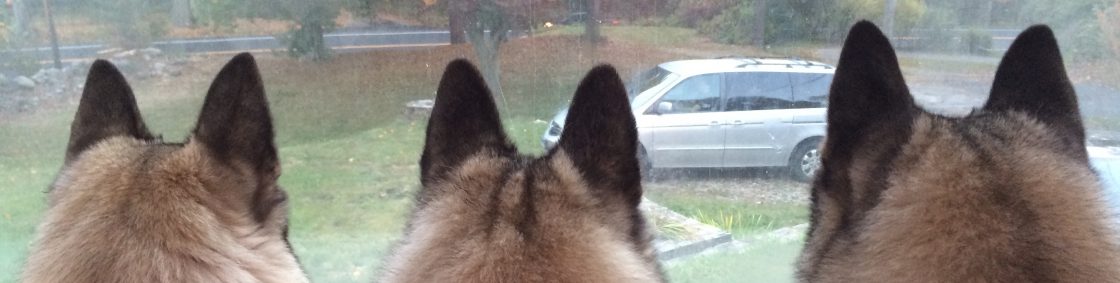
After celebrating my husband’s birthday Monday, I teased him that our oldest dog, Jinx, an 11-year-old elkhound, is the about same age as him in ‘human years.’ We joked about it because we call her “the ol’ bitch” because she has that grizzled look of a wise old dog. This look – white hairs nearly covering her once black muzzle – afflicts many species. My husband joked back, “We are both grizzled.”
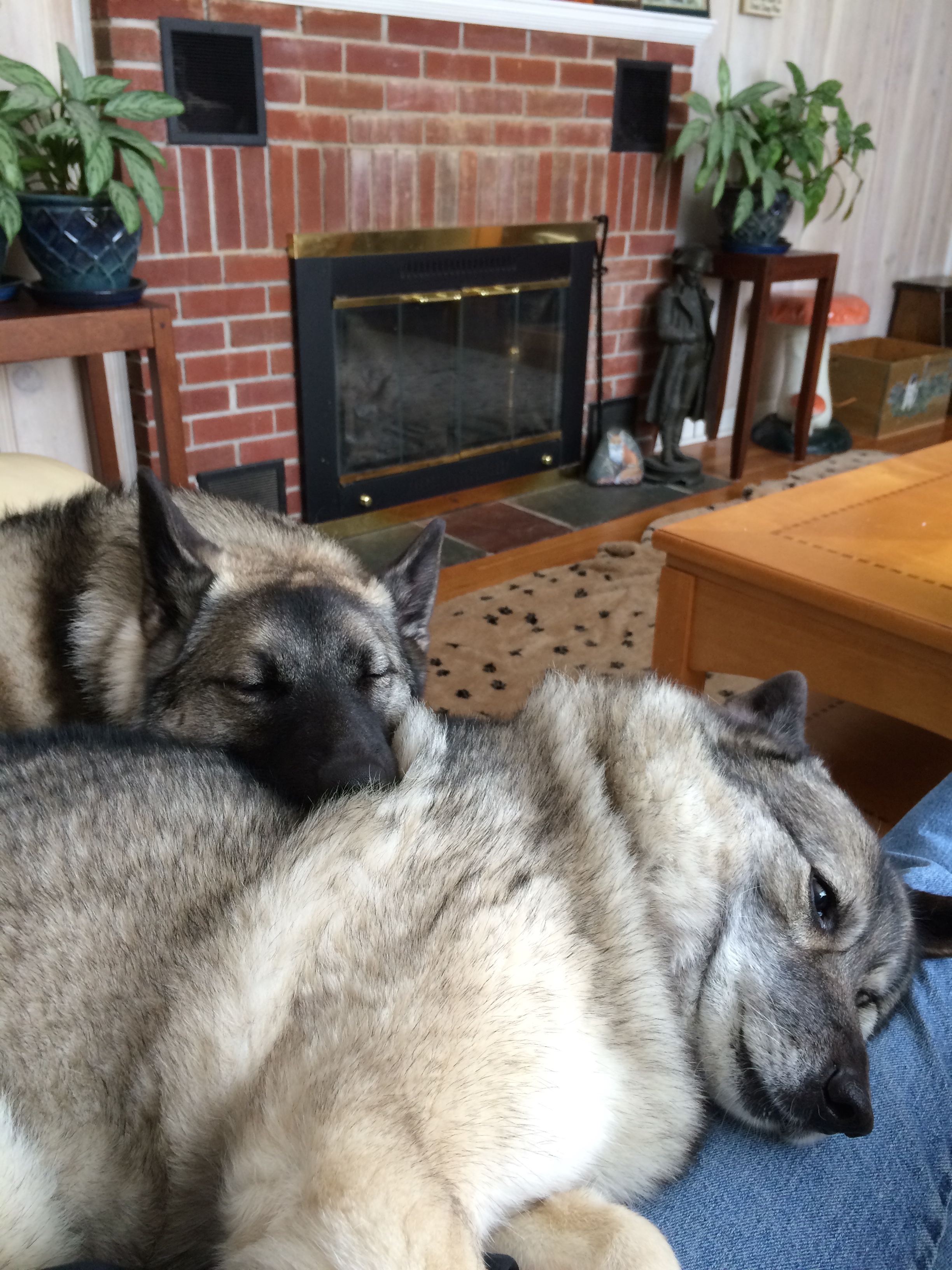
Puppy Bitch ~ Ol' Bitch

Puppy Bitch ~ Ol’ Bitch

Dog Age in Human Years
In my previous career as the American Kennel Club’s communications director and in-house dog expert, I’d routinely answer questions from the media such as, “Where did the one dog year equals seven human years in calculating a dog’s ‘human age’ come from?” Press inquiries usually came after the death of really old dogs, like a 21-year-old dachshund from Long Island or an allegedly 29-year-old mixed breed from England. Over the years, I’ve answered this seven-to-one conversion question for Esquire’s Answer Fella column, the Wall Street Journal’s ‘The Numbers Guy’ Carl Bialik, and even Slate’s Christopher Beam.

The origins of this conversion as unknown. Most journalists tend to point to the first mention of a human to dog year equivalent in 1268, based on an inscription on the floor of Westminster Abbey in London. Human and canine ages were used in calculating how old one would be around Judgment Day. Ancient scrawl stated that a dog’s average life span was nine years and that humans lived to be 81 years. Another notable comparison example is from Georges Buffon, the 18th century French naturalist, who declared that dogs live about 10 to 12 years while humans live about 90 to 100 years.

Using a rough mathematical formula a nine to one rule was born from these early notations. Then, according to William Fortney, a Kansas State University veterinarian, as quoted in the WSJ piece, human life expectancy was pegged at 70 years (thank you life insurance expectancy tables) and dogs at 10 years and thus the seven-to-one rule was forged into our dog-loving psyche. I tend to believe Fortney’s explanation for the origin of this rule, “My guess is it was a marketing ploy…a way to educate the public on how fast a dog ages compared to a human, predominantly from a health standpoint. It was a way to encourage owners to bring in their pets once a year.” Or you could believe Esquire’s Answer Fella who reported my quote on the rule this way, ..the origin of the seven-year rubic is — like Keith Olbermann’s colon — “shrouded in mystery.”

The Dog Age Formula
But more than half a century ago, science, researchers, and canine studies started to debunk the seven-to-one rule as not a “one-size fits all” for determining you dog’s age in human years. In fact, they learned that the formula varies based on the dog’s advancing age and the dog’s weight as an adult. So unfortunately, like most well-executed marketing campaigns, the seven-to-one rule lives on in popular culture and now must be continually debunked. But if you want to accurately calculate which dog in your household is closest in age to your husband then follow these tried and true guidelines that have been around for the last decade.
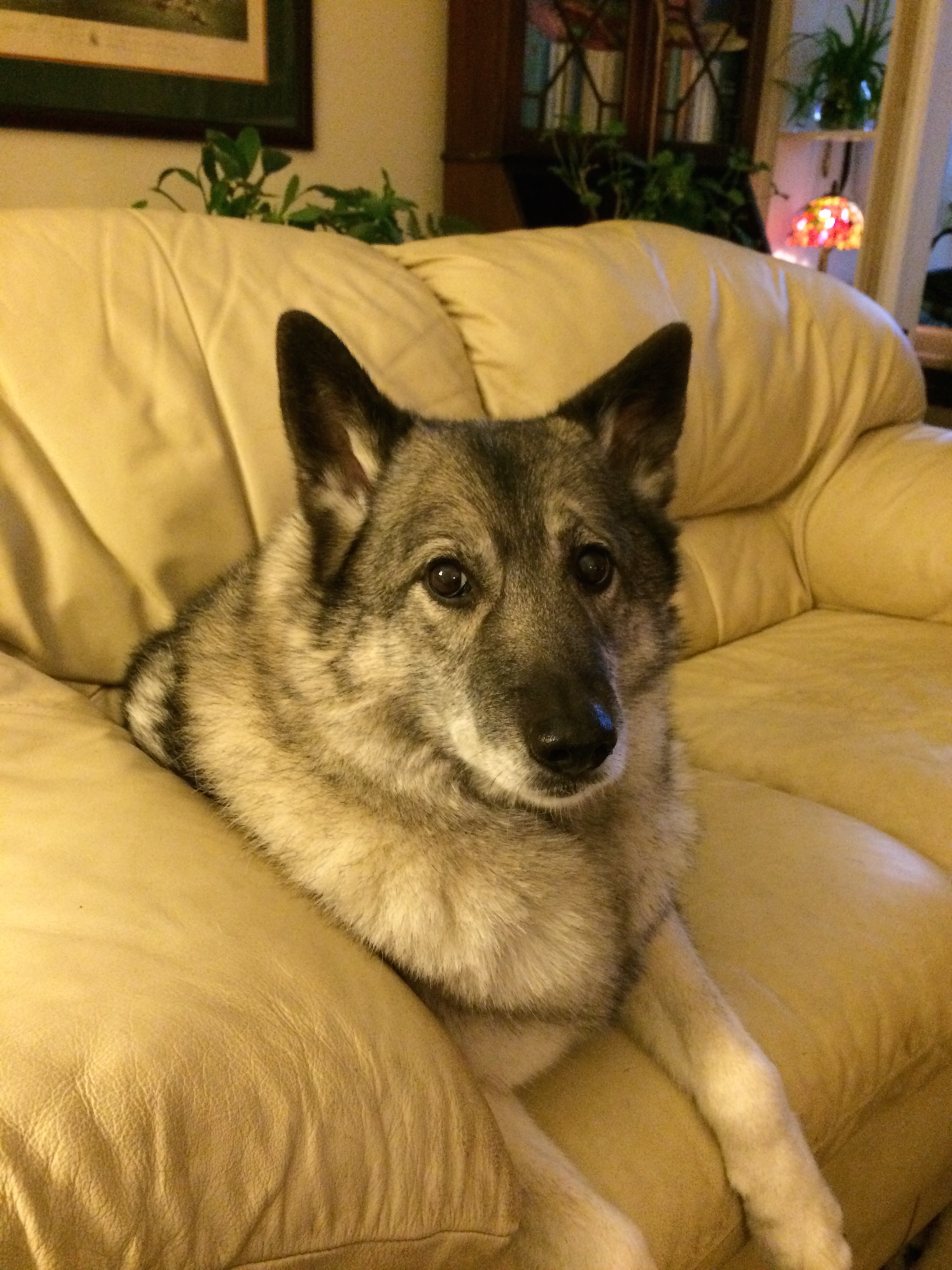
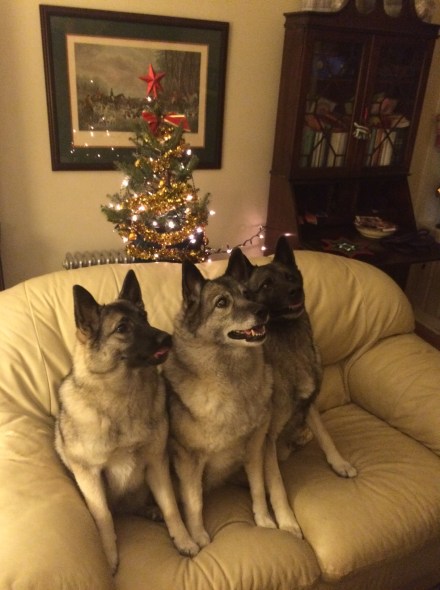
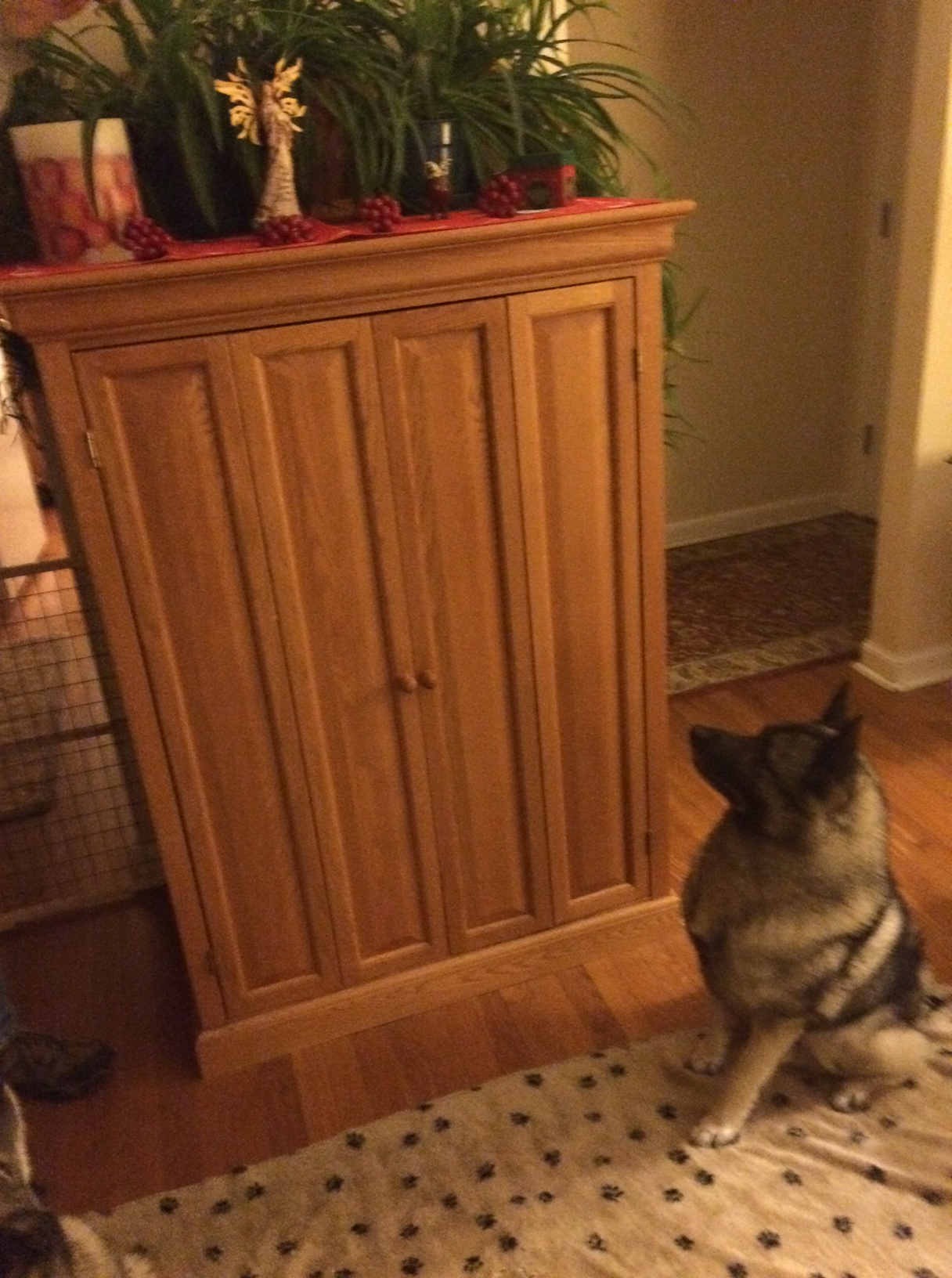
Ol' Bitch Jinx Keeping Ray's Spot Warm

Ol’ Bitch Jinx Stealing Ray’s Spot

The first year of a dog’s life is very similar across all the size categories. Most calculating charts have four sizes based on the adult weight of your dog: Small (under 21 pounds); Medium (21-50 pounds); Large (50-90 pounds); and Giant (90 plus pounds). The first two years of a dog’s life show tremendous growth and aging.

1-year-old
Small (under 21 pounds) = 15 years
Medium (21-50 pounds) = 15 years
Large (50-90 pounds) = 14 years
Giant (90 plus pounds) = 12 years

Two-years-old
Small(under 21 pounds) = 24 years
Medium (21-50 pounds) = 24 years
Large (50-90 pounds) = 22 years
Giant (90 plus pounds) = 20 years

But as dogs age, another mystery enters the formula. The larger the dog the quicker it ages (in human equivalents), so by the time a giant dog is 8-years-old, its human equivalent would be 64-years-old. Compare that to the 8-year-old small dog, who would be only 48-years-old, a difference of 16 years aging between the two! Curious to find our about your dog’s human age? Here’s a complete chart for equivalent age in human years.

Dog Size
Dog Years Giant Dogs

(> 90 lbs.)

Large Dogs

(51-90 lbs.)

Medium Dogs

(21-50 lbs.)

Small Dogs

(< 21 lbs.)

1

12

14

15

15

2

20

22

24

24

3

28

29

29

28

4

35

34

34

32

5

42

40

38

36

6

49

45

42

40

7

56

50

47

44

8

64

55

51

48

9

71

61

56

52

10

78

66

60

56

11

86

72

65

60

12

93

77

69

64

13

101

82

74

68

14

108

88

78

72

15

115

93

83

76

Save the Carriage Horses of New York City

With the Westminster Kennel Club Dog Show right around the corner, it’s time to share a column I recently wrote about the Carriage Horses of New York City. If you are coming to the city for the big dog show, stop by the stables to meet the horses, take a tour and go for a carriage ride. Go to Facebook for Canines and Coaches 2015 open house event info: https://www.facebook.com/caninesandcoachesNYC2015

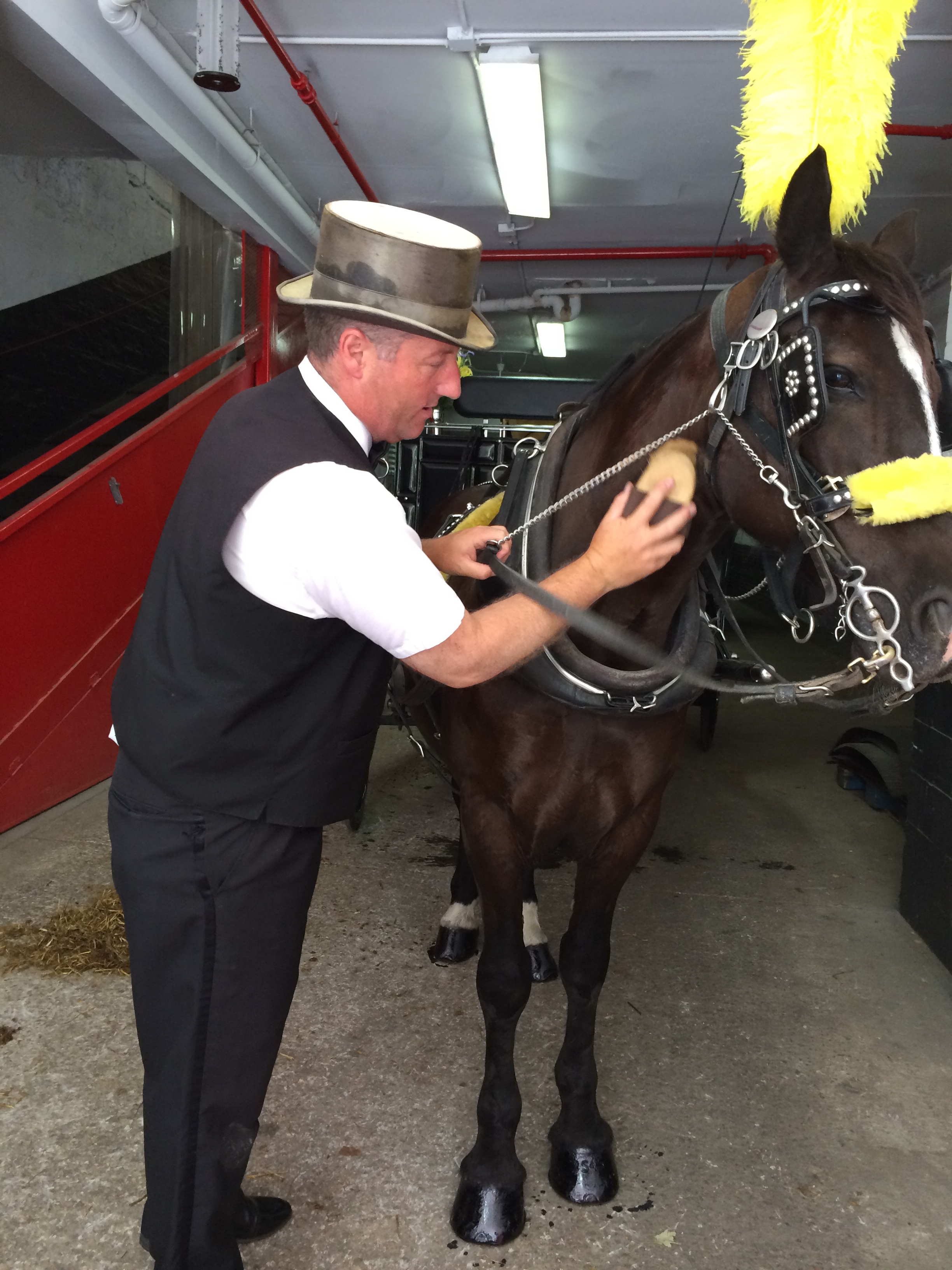
Grooming Tyson before he heads out for a carriage ride

Grooming Tyson before he heads out for a carriage ride

Lisa Unleashed ~ Originally published in The Newtown Bee, November 14, 2014:

Last summer I was invited by a fellow dog breeder to go on a tour of the carriage horse stables on 52nd Street in New York City. I was vaguely aware that New York City’s Mayor Bill DeBlasio had made a campaign pledge to remove the horse carriage industry from Manhattan and replace them with electric car rides in Central Park. As a horse lover, I found this political promise odd and even dangerous. Animal rights extremists were alleging that the carriage horses were not be treated humanely and that they needed to be “rescued” from this dangerous life on the city streets. I was curious, so I accepted the invitation and went to tour the stables.

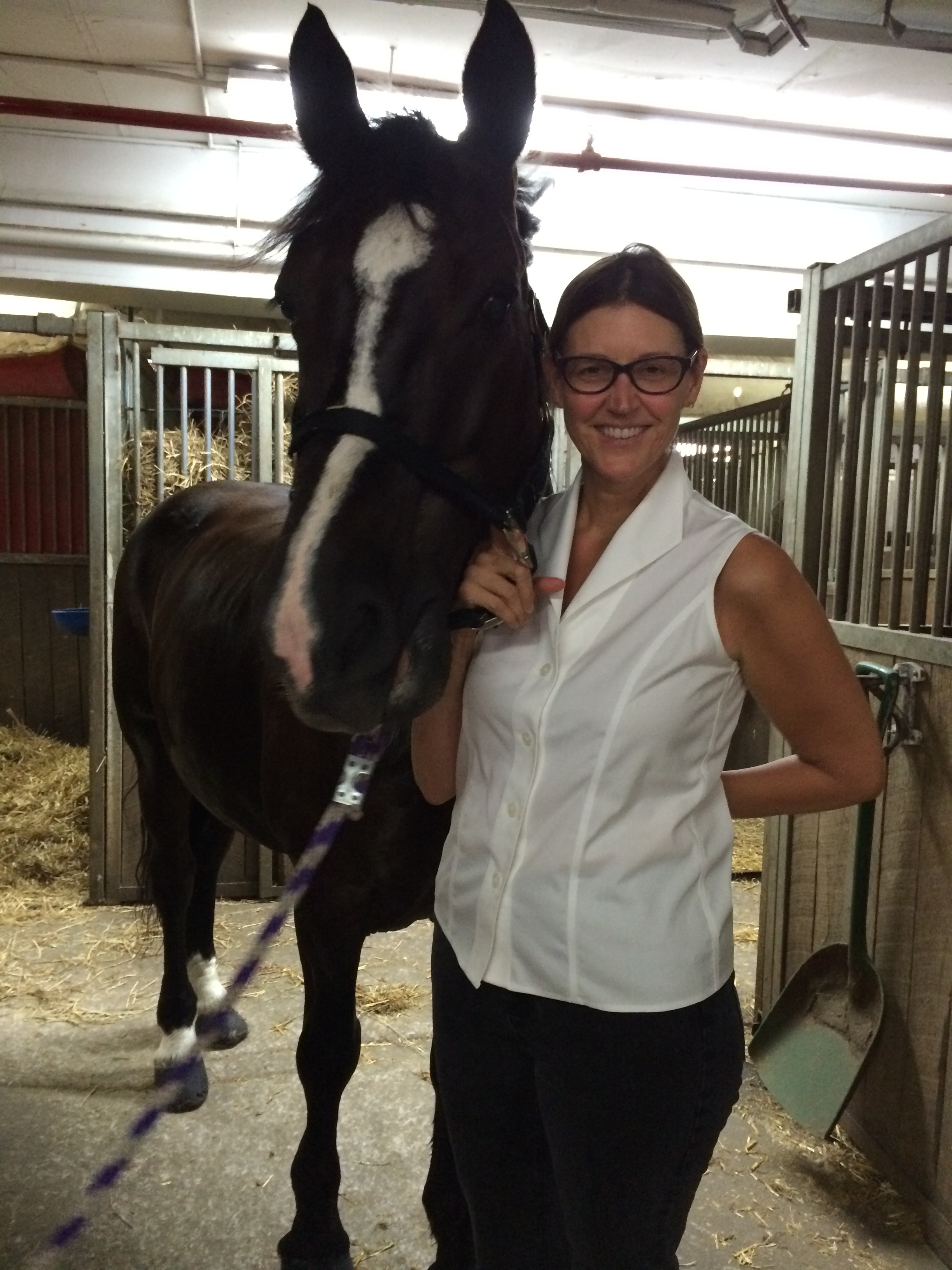
Tyson & I - Carriage horse Extraordinaire!

Tyson and Lisa Peterson. Carriage Horse Extraordinaire! Tyson is a handsome 12-year-old Percheron/Morgan cross. 

What I found amazed me! As I toured the three-story stables, I was impressed with with rubber matted ramps connecting the floors in a barn any horseman would be proud of. It was summer and there was neither a foul odor from the box stalls nor a fly that I could find. What I did find where well cared for, well-groomed, well-fed, content horses munching on good quality hay, drinking clean water, and taking carrots from my hand. One of the drivers, Steve Malone, a second-generation horseman, offered us a carriage ride through Central Park. We climbed aboard the open-air carriage and enjoyed the views, the clip clop of the hooves on the roads, and the slowing down of a hectic day to enjoy the nature of the park. It was a touch point with horses and history.

Carriage Horse Driver Stephen Malone takes us for a tour of Central Park

Carriage Horse Driver Stephen Malone takes us for a tour of Central Park

Because I had taken the time to visit with the horses, experience a carriage ride, ask questions of the owners on all matters of care, conditioning and retirement, I was soundly convinced that these horses, who have a job and do it well, don’t need to be rescued from the city streets. In fact, this industry is highly regulated since the 1850s with oversight by five city agencies and a 144 pages of regulations. Horses cannot work if it’s too hot, the can not work if its too cold, they get mandatory vet visits several times a year and five weeks of vacation away form the city. They even have a retirement home called Blue Star Equiculture.

Rally for Support

This past weekend, I was fortunate enough to attend a conference in support of animal welfare where one of the licensed drivers from New York, Christina Hansen, spoke on the topic of the threat to ban the horses. It appears to me that there is a hidden agenda behind this issue. I won’t taint your objectivity about it but it involves real estate developers and animal rights groups electing a political candidate. It also involves a community’s response in the face of attacks. In addition this issue has created a rare occurrence in New York City media, where The New York Times, the New York Daily News and the New York Post, all come out in favor of the carriage horses in their editorials. I urge people who want to learn more about this topic, this hidden agenda, and how to support saving this important tradition of horses in our everyday lives to visit www.savenychorsecarriages.com. Please watch the video, narrated by Liam Neeson, a strong advocate to preserve this historic tradition in the city. Also, stop by the blog posts of author Jon Katz at www.bedlamfarm.com for yet more insight about our humanity and our horses.

Stall with a view!

Stall with a view!

Canines and Coaches & Clip Clop NYC!

The industry has several opportunities each year for open houses and tours of the stables. They believe in being transparent and are proud to show off the care their give their horses. Last June they held their annual ClipClopNYC open house –  www.clipclopnyc.com – and in February they held the first annual Canine and Coaches open house in conjunction with the venerable Westminster Kennel Club dog show. The carriage drivers offered discounted rides for any exhibitor and their dog who had been to Westminster. It’s nice to see that when the going gets tough, the dog and horse people always pull together. Next year, Canines and Coaches will be happening again. For more information visit http://www.facebook.com/caninesandcoachesNYC2015.

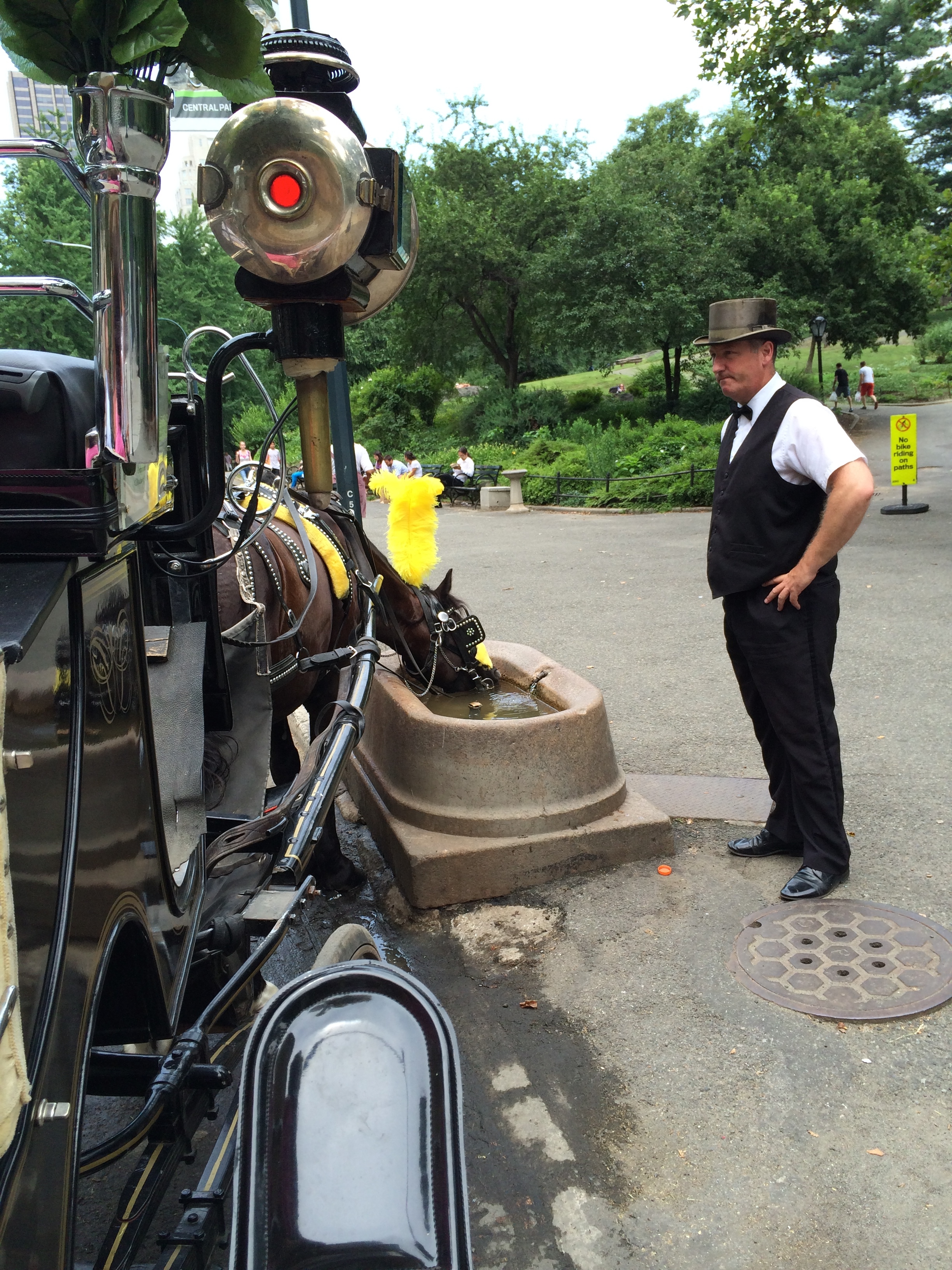
Stopping for a drink of cool water from a water trough used by horses for more than a century

Stopping for a drink of cool water from a water trough used by horses for more than a century

The movement to ban the carriage horses is not over and it’s an issue still before the New York City Council, despite a recent poll showing that New Yorkers are 2-to-1 in favor of keeping the carriage horses in Central Park. If you are a horse lover and want to support keeping this tradition alive, please, follow “The Famous Horse-Drawn Carriages of Central Park” on Facebook and @NYChorses on Twitter. Use their hashtag, #SaveNYCHorseCarriages to stay informed and help however you can.

Puppy’s First Christmas

One of my favorite holiday traditions is celebrating with the newest member of the family, the puppy! No matter when the puppy arrived during the year they will always have a first Christmas. Like most of us dog lovers, I’m guilty of overindulgence of my treasured pets. Besides the toys and treats, monogrammed stockings were ordered for them this year. Ok, that was more for me than them.

Holiday Decorating for Dogs
Puppy’s first Christmas is full of wonder and investigation, so in the spirit of safety, no decoration reaches into the puppy zone. Believe me, it’s taken multiple puppies and years of broken ornaments, knocked down large trees, drinking Christmas tree water, licking pine needles, ripped open packages, eaten candles and close calls with poinsettias to come to this design. There are just too many holiday hazards with poisonous plants, glass ornaments, tinsel, chocolate, electrical wires, and open flames to even consider using them. I prefer simplicity and peace of mind for my newest puppy and family pack of high energy hunting hounds.

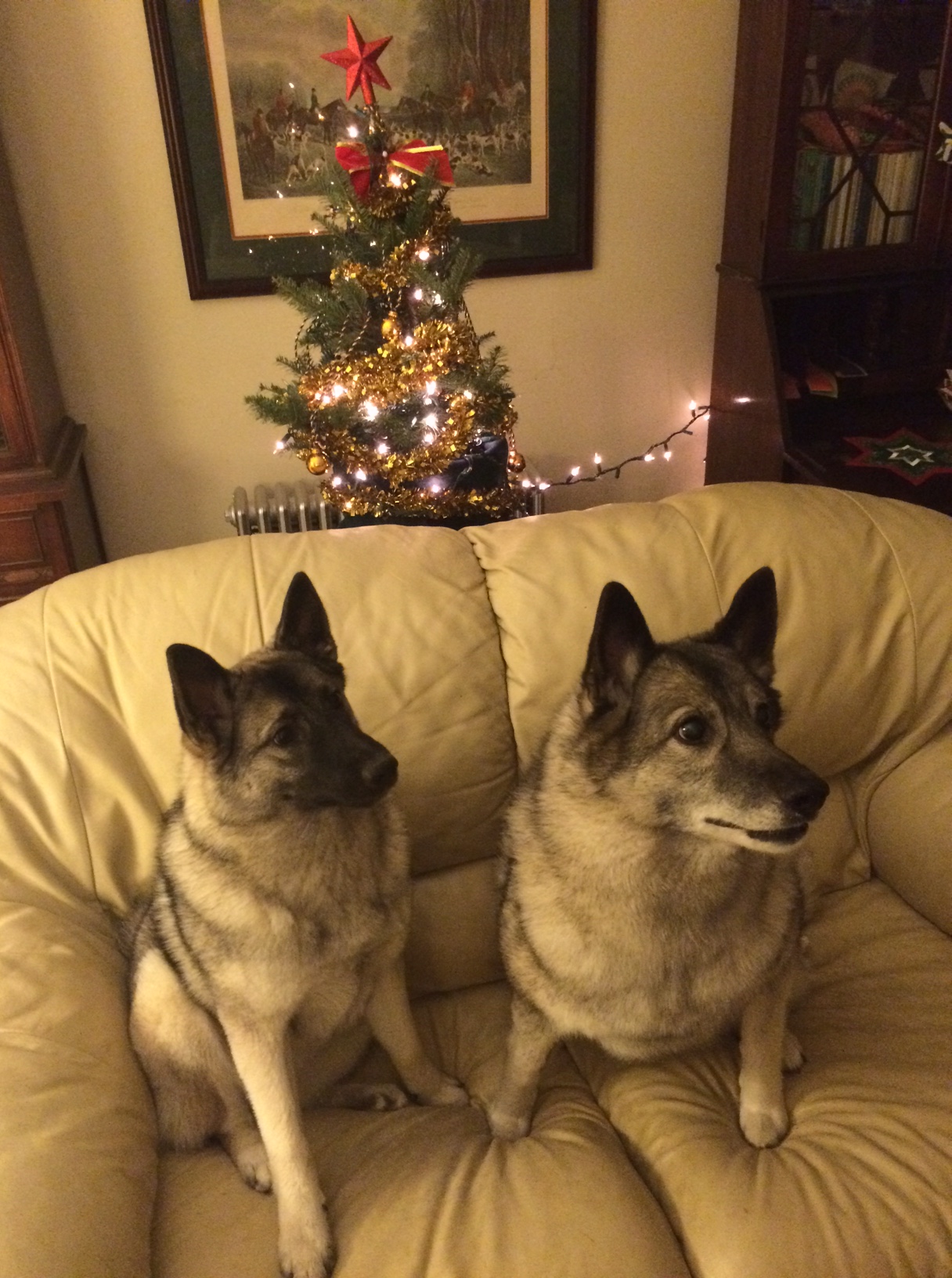
Adele and Jinx with their elevated Christmas tree

Adele and Jinx with their elevated Christmas tree

The centerpiece, a two-foot tall Douglas Fur tree in a bucket, rests atop a three-foot tall table placed behind the couch. This keeps it above puppy’s sightline and out of the indoor play area (i.e., the center of the living room). By wrapping a tree skirt (I’ve repurposed an old horse’s dark green quarter sheet) around the bucket and draping table, it keeps inquisitive puppy noses away. Tree decorations are kept to a minimum: one strand of gold garland, a handful of little ornaments and one string of lights. Lights are strung from the tree across the narrow passage way 3 feet above the floor behind the couch to behind a secretary to plug in. This way, no electrical cords are on the floor for a nosy puppy to check out.

Elevated electrical wires for tree lights safely above  a prying puppy's nose

Elevated electrical wires for tree lights safely above a prying puppy’s nose

With no room under the tree for the gifts, again, we elevate them even higher, on top of the secretaries near the ceiling. A few larger ornaments previously hung on the big tree now dangle from hutch door fronts and wall sconces. My favorite are two lovely gold painted horseshoes adorned with jingle bells given by the NBLA as party favors at one of their holiday celebrations years ago. Every decoration and wrapped gift is placed 3 to 5 feet above the puppy zone.

Keeping all decorations way above the elkhound's sightline keeps all elkhounds safe for the holidays.

Keeping all decorations way above the elkhound’s sightline keeps all elkhounds safe for the holidays.

Christmas Eve Fables
I don’t know when I first heard this fable, but as a child I always believed that all animals bowed down on their front legs at midnight on Christmas Eve to pay homage to all the animals at the Bethlehem manger watching over the birth of Christ. In my childhood home we had a miniature manger complete with biblical action figures, glittering wise men, and an assortment of animals. While counting down the 12 days of Christmas I’d play out this fable with cows, camels and sheep all bowing down in front of the little cradle with the baby Jesus. One day I noticed baby Jesus’ leg bore teeth marks, no doubt from one of the family dogs, who thought he was a toy! The following year, the manager moved from under the tree to the table top. I was never awake at midnight, since I didn’t want to scare away Santa Claus, to see if my pets took part in this tradition.

For the first time in decades, just my husband and hounds will be home, just the five of us, to open our gifts on Christmas Eve. Our puppy will be introduced to the giving of the gifts. The celebration begins with the unwrapping of numerous toys that all three dogs will vie for. After they rip off the wrapping paper, the fun begins. Anyone with a pack knows that what ever toy/bone/treat the other dog has is always better than what they have. The pack plays what I call musical bones! And it usually starts with the youngest puppy going after the alpha dog’s bone, if successful, the alpha goes after beta’s bone, who then turns around and goes after the puppy’s bone. Repeat. Repeat. Repeat.

This bone-stealing ritual continues unrelenting until they are all exhausted from posturing, chewing and the sheer excitement of something new to play with. After about an hour, the puppy collapses on the floor into immediate slumber, the old dogs soon follow. Then us humans can open our gifts in relative peace. This year I’m hoping to extend the celebration to midnight to finally see for myself if the dogs bow down in honor of the animals in Bethlehem. Happy Holidays to all Hounds from Adele, Jinx & Linx.

Be Thankful for Purpose-bred Puppies

This past weekend dog lovers descended on the “Thanksgiving Classic Cluster” in Springfield, Massachusetts. This cluster of dogs shows is presented by the Springfield, South Windsor, Holyoke and Windham County kennel clubs who join together to offer four days of dog shows at the Eastern States Exposition, home of the iconic “The Big E” fair. Amongst the more than 2,500 purebred dogs representing 167 breeds at the shows, were dozens of darling puppies. 

Dog shows are put on by volunteers who then give a part of the proceeds to needy canine causes in their communities. Yes, dog shows are fundraisers. But the best by-product is meeting all the puppies! There is nothing cuter than a ring full of wagging and wiggling puppies waiting to kiss anyone who calls their name. Every size and shape were on hand, from the handsome Petit Basset Griffon Vendeen to Miniature Longhaired Dachshund in the hound puppy ring. There was the large Great Dane and the little Chihuahua, and of course, everyone’s favorite, the Golden Retriever puppy. 

Count Our Blessings

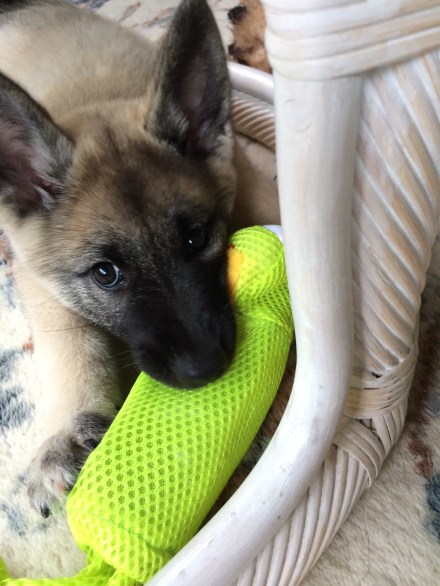
Adele Investigates

Adele in the wilds of the backyard in Dodgingtown

During the annual turkey tradition many are faced with the “Let’s go around the table and say what we are thankful for” routine. Heard are the familiar refrains of spouse’s and parent’s names and the occasional ‘good health’ thrown into the mix before consuming an 8,000 calorie meal. But this year when asked that question, my reply will be, “I’m thankful for puppies!” Everyone at the table will giggle and laugh but to someone who has spent a lifetime “in dogs” I really mean this as something serious. 

Ray welcomes Adele to Dodgingtown

Ray welcomes Adele to Dodgingtown

I’m thankful for all the dedicated responsible breeders who plan and lovingly raise litters of puppies. I’m thankful they have spent decades of scientific study in health research, genetics and pedigrees. I’m thankful that when families want a happy, healthy purebred puppy, that meets their needs and lifestyle, they can find one at the home of a responsible breeder. I’m thankful that purebred puppies come with predictable personalities, sizes and coat types, making a lifetime match with a new owner’s needs a very simple and rewarding process. 

I’m thankful for the hundreds of breeds (and therefore puppies) in the world. This past weekend I met a 15 week-old Pumi puppy. What’s a Pumi, you say? An adorable Hungarian herding breed with a soft coat like a Poodle and erect ears with floppy tips that give it the cutest expression ever. I melted when I met a 6-month-old Maltese puppy so tiny with its white flowing coat, yet so calm you could cradle him in your arms. Then I met a 17-week-old Norwich Terrier puppy all the way from Finland. His hardy coat, “like a hedgehog” the owner said was a tactile delight. Oh, did I mention the puppy kisses? I am thankful for all of them. 

Puppies for the 21st Century 
These breeds all had a fundamental purpose to help mankind survive the millennium. Whether to help us with hunting for food, guarding our farms and flocks, or just keeping us warm at night. Some simply being small enough to fit up the sleeve of a royal princess’ robe to ward off the chill in the palace at night. Today I’m thankful for their 21st century purpose. The Pumi is going into Agility, a fast-paced and athletic dog sport to keep her owner active. The Maltese belongs to a senior couple who needs a small lapdog to keep them company in retirement. The Norwich Terrier will be bringing genetic diversity to a breeder’s responsible breeding program. Each puppy has a story, each breed has a purpose. I am thankful that in America each new puppy owner has the freedom of choice for the type of puppy they want. 

Adele and Lisa Visit the Enchanted Garden

Adele and Lisa Visit the Enchanted Garden

I’m also thankful that there are smart people who combat and defeat proposed mandatory spay and neuter laws of all puppies sold in America. If that were to happen, eventually, there would be no more puppies.  And that would be a very sad world indeed.

So this Thanksgiving I’m thankful for all the puppies and the people who love them. I’m thankful for the volunteers that put on dog shows so the public has easy access to learn and meet scores of breeds and breeders on any given weekend. And I’m thankful for the breeders who preserve and protect them for future generations to enjoy. I am thankful that after the Thanksgiving meal there will be a purebred puppy curled up by the fireplace for everyone to enjoy. 

My First Canine Good Citizen Dog: Bruno the Norwegian Elkhound

In honor of AKC’s Canine Good Citizen program turning 25 years old, I unearthed my first CGC certificate in my canine archives. Good Job Bruno!

americankennelclub's avatarAKC Dog Lovers

By Lisa Peterson

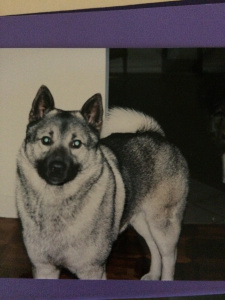
Bruno

Bruno and I were minding our own business on a walk around the hotel at the Norwegian Elkhound National Specialty in 1996 when a friend spotted us and said, “Hey, come take the Canine Good Citizen test, it’s right over here.” I had no idea what this was, in fact, I didn’t even know the 10-steps prior to signing up for the challenge. Bruno – an AKC Champion who had just turned 4 – and I had been training to start Novice obedience a few months earlier, so I though why not, he can sit and stay and heel.

We entered the ring ready to begin. I got nervous. Bruno took one look at me with his big brown cow eyes as if to say, “What’s the big deal? I can do this.” And off we went. The more steps we completed, the more fun Bruno…

View original post 252 more words

19th century foxhounds

The Roosevelts: Celebrated Dogs of America

While binge-watching Ken Burn’s historic PBS series The Roosevelts last week, a photo of Theodore Roosevelt and his hunting dogs triggered a thought; there is a meeting room in my office called the Roosevelt Room. I knew the collection of sporting dog prints and detailed pedigrees that graced the walls had something to do with “Teddy” but after a decade of sitting through countless meetings starring at these prints, their origins had been lost on me. So I took a recent lunch break to revisit the treasures of the Roosevelt Room at the American Kennel Club headquarters in Manhattan.

As you turn on the light switch, you are greeted by the black ink on grey paper cover art for the collection “Celebrated Dogs of America, Imported and Native, by A. Pope Jr., published by S.E. Cassino, Boston.” Beneath the poster a framed handwritten note card from Mrs. Richard Derby of Oyster Bay, New York, dated May 1974, reads, “These prints of Celebrated Dogs of America were collected by my father Theodore Roosevelt when he was a student at Harvard in 1879.”

Pointer dog breed

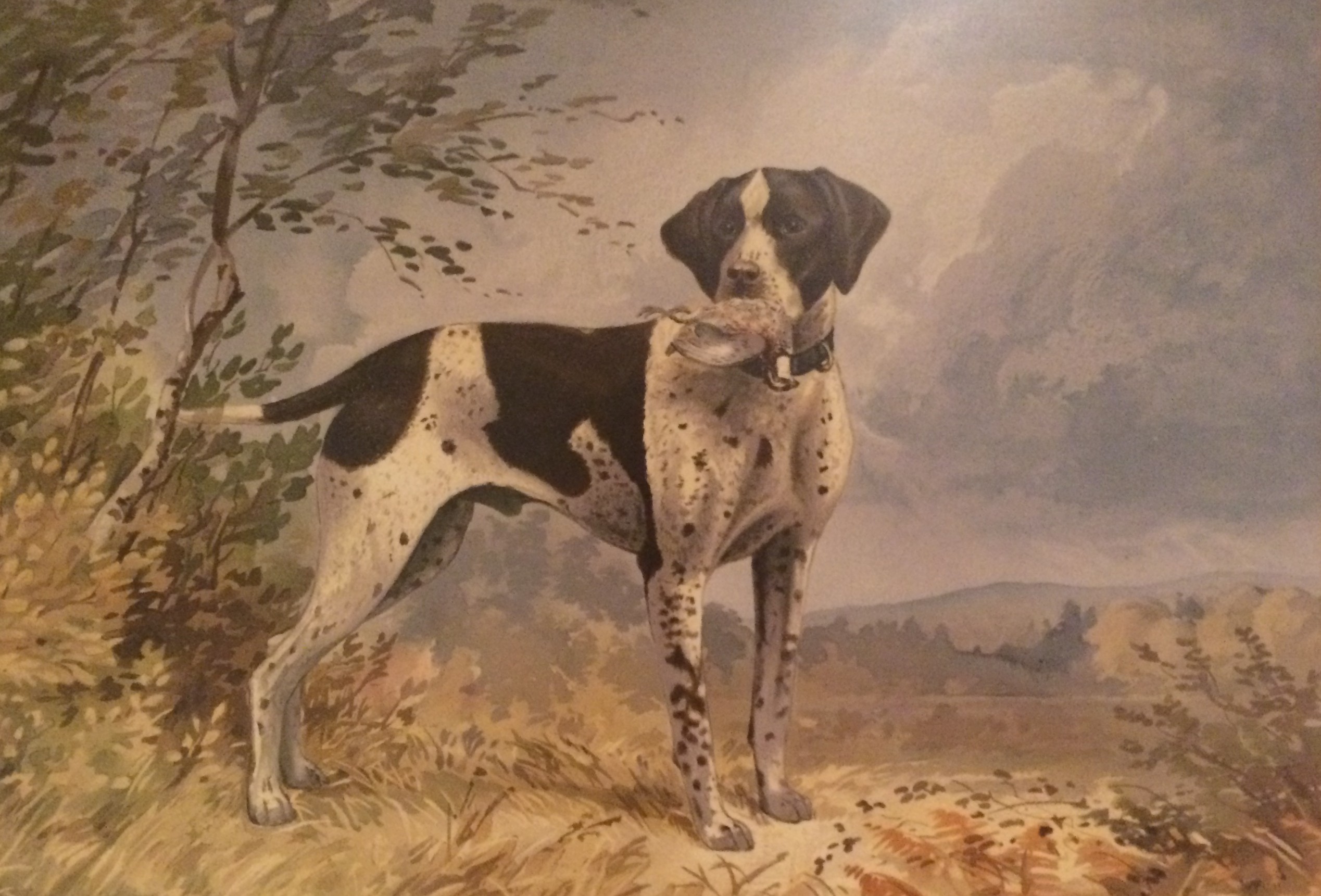
Dan the Pointer

As part of 19th century gentlemen’s society, Teddy must have not only studied, but hunted with these sporting purebred dogs. Today, the 18 muted chromolithographs of original watercolors painted by wildlife painter Alexander Pope, Jr. (1849-1924) hang in a neat row, midway up the walls, circling the room, except where their flow is interrupted by an HDTV used for video conferencing.

Celebrated Dogs of America

Who made the cut in 1879? Celebrants included a pack of black and white fox terriers named Rattler, Vixen, Tyrant, Minnie, Nettle and Daisy; the Rose Tree Fox Hunting Club of Philadelphia foxhounds, and several champion pointers including Dan, a native whelp born 1876 and owned by Mr. John G. Heckscher of New York City. Under Dan’s striking pose it reads, “Dan’s performance in the field have won him a high private reputation, and it is claimed by his friends that as a retriever he has no superior in this country. His first performance at a bench show was in Springfield in 1876, when he secured first in the puppy class, and the following year received ‘very highly commended’ at the New York bench show.”

Fox Terriers

Fox terriers Rattler, Vixen, Tyrant, Minnie, Nettle and Daisy

Trimbush, a Clumber Spaniel, whelped May 1875, had quite the pedigree. “Trimbush was bred by Mr. William Brailsford, head keeper to the Duke of Westminster, and was imported by Mr. Jonathan Tomas, jr., of New York. He is a perfect specimen of the breed and his superior could not be found in England at the time he was brought to this country.” Trimbush’s mother was Earl Spencer’s Sall, out of Earl Spencer’s Meg and Marquis of Exeter’s Beau, Beau’s sire being the Duke of Newcastle’s Rover.

Clumber Spaniel

Trimbush the Clumber Spaniel

It seems that big fancy names were not the rage back then. Take for example others in the collection, champion Red Irish Setters Elcho & Rose, Don the smooth-coated St. Bernard, Mike, the imported Irish Water Spaniel, Lofty the Llewellyn Setter Dog, Jack, the English Mastiff, and the white Bull Terriers, Spider, Grabb and Nellie, whose likenesses silhouetted against farm fencing made a pretty picture.

Bull Terriers

Bull Terriers ~ Spider, Grabb and Nellie

Historical Hounds in History

Some dogs had famous owners, like a pair of greyhounds named Tippecanoe and Prairie Girl. “Tippecanoe was a white dog formerly the property of General Custer and is a grandson of a great dog named Master McGrath.” Under the print a letter dated April 12, 1879, three years after Little Big Horn, from Mrs. Custer reads, “ Sir, I regret to say the pedigree of the imported hound General Custer received from Scotland has been mislaid among the papers in our home in Monroe, Mich. The pedigree of the dogs sent him from Canada we never had. I do not know whether the dog you own is from the Scotch or Canadian dog. We often had fifty in the pack of hunting hounds. I thank you for your kindness to the dog, and I am glad he has a good home. Very respectfully, Elizabeth M. Custer.”

greyhounds

Tippecanoe & Prairie Girl greyhounds

Rattler and Belle, two Beagles, owned by J.M. Dodge of Detroit came with this explanation. “Foot beagles should not much exceed nine inches in height; they are now even used up to eleven and twelve inches, going a pace which requires a good runner, in prime condition, to keep up with them.” Did Teddy ever had to keep up with these quick Beagles as they chased hares across the countryside.

Beagles

Rattler and Belle, two Beagles, owned by J.M. Dodge of Detroit

Bevis the Irish Wolf-Dog is my personal favorite. “Bevis is believed to be the only specimen of his breed in this country. He was bred in Ireland by a gentleman who has given a great deal of attention to bringing the breed back to its former excellence. (it being now nearly extinct). The dog was brought to America and shown at Westminster Kennel Club in 1879.” His description goes on to state “…The wild animals which he seemed powerful enough to conquer having long disappeared from the kingdom. The beauty of his appearance and the antiquity of his race are his only claims as he disdains the chase of stag, fox or hare.”

I wonder which dog was Teddy’s favorite? If you’d like to view the collection, drop me a line, it’s open for public viewing by appointment.

World Dog Show 2014

World Dog Show 2014

Dog shows are the best place to see a variety of breeds here in America. But seeing tens of thousands of purebreds gather from around the world requires a trip to the annual FCI World Dog Show (WDS). This year’s edition held in Helsinki, Finland, hosted by the Finnish Kennel Club (FKC) as part of their year-long 125th Anniversary celebration did not disappoint. Finland is a nation of dog lovers, avid hunters, and reindeer ranchers with 5.4 million citizens. According to the FKC, “Every fifth Finnish family owns a dog. Some 80% of these 600,000+ dogs are pure-bred. Each year, about 50,000 dogs representing more than 300 different breeds are registered in Finland.” Of those 300 breeds, only five are Finnish natives.

Finkies, Lappies & Reindeer Dogs

In honor of the FKC’s 125th, the show organizers waived the entry fee of Finnish Breeds. This brilliant public relations move created large entries of local dogs among the 21,200 dogs in attendance. An amazing 526 Finnish Lapphunds took up five of the 100 show rings one day. This friendly black and tan long-haired medium-sized dog has added to his hunting and herding roots to become a “Lapp dog.” Next up in the Finnish breed parade, an amazing 234 Lapponian Herders were entered. This breed is known for its reindeer herding ability in the northern reaches of Lappland. This breed is a smooth-coated black and tan version of the Lapphund. In fact, if you live in Finland and own property, each year the government will give you 2,000 reindeer to tend to. So you’d better have a Lapponian Herder or two kicking around to help with the herd. There were more than 100 Finnish Spitz – the national dog of Finland – with its brilliant orange dense coat, prick ears, curly tail and foxlike face.  Affectionately known as “Finkies” these “barking bird dogs” are known for their ability to flush upland game fowl for the adventurous hunter.

Another national favorite, the most popular registered native breed, the Finnish Hound, made a handsome appearance with his traditional foxhound looks of tan, black and white with long floppy ears to capture the scent of his prey of hare and fox. A Finnish Hound even competed in Best in Show. Wrapping up the natives was the majestic Karelian Bear Dog. This tall, mostly black with white accents hunter of bear, lynx and wolf, clearly demonstrated why he was classified in the Spitz and Primitive breeds group. I must have watched 75 male Karelian Bear Dogs. They are cool breed, similar to my own Norwegian Elkhounds in structure, Scandinavian spitz stature and hunting prowess, their temperament clearly remained on the primitive side.  While all dogs at American dog shows are expected to present themselves in a dignified and calm demeanor, these dogs loved to break out into snarling fighting spats in the ring. Now the handlers kept them all on a tight leash, but more than once as I sat ringside watching these magnificent creatures, I pulled my feet away from the ring as they passed, just in case!

Breeders’ Group and Best In Show

My favorite part of the World Dog Show was watching the Breeder’s groups. Each night the arena filled with teams of three to five dogs shown to represent a kennel’s bloodlines. Seeing the most consistent look from animal to animal to animal was a real thrill. Plus, they all dressed in the same costumes! From five Salukis handled by magenta bloused ladies, to four yellow dressed handlers with black Flat-Coated Retrievers in profile against them to smart burgundy suits walking with four Lhasa Apsos. Proud breeders showing off their best dogs. For more photos visit:  http://www.pinterest.com/elvemel/world-dog-show-2014-helsinki-finland/

There was much fanfare, a live band, and beautiful emcee, to finally announce that the  Affenpinscher “Tricky Ricky” (son of Joey, the Westminster Best in Show winner) won Best in Show.  But my top pick for the three-day event was meeting hundreds of native Finnish breeds. “Kittos” Finnish Kennel Club.